Sanity vs Contentful vs Storyblok: Best Headless CMS with Next.js in 2026
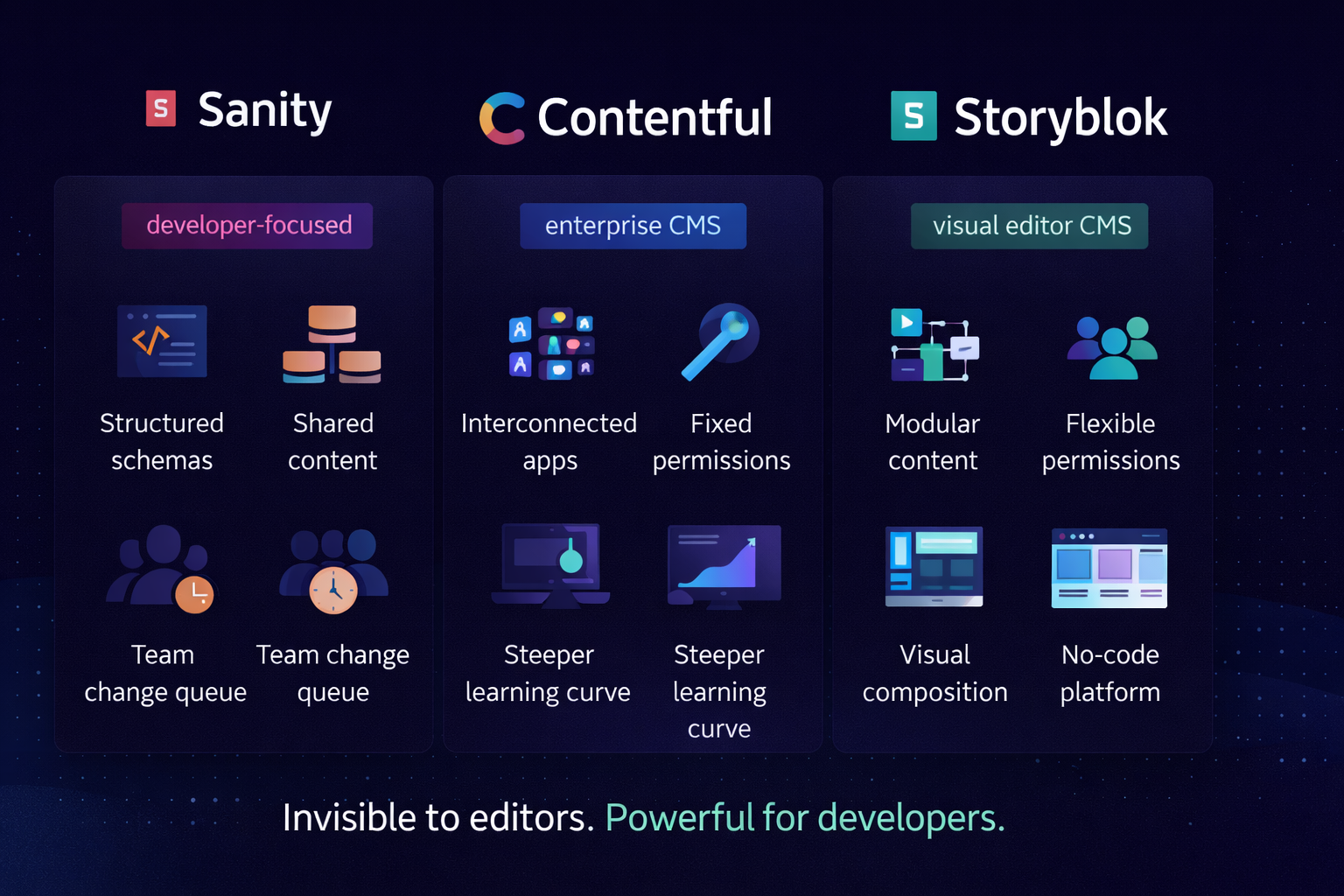
Choosing the right headless CMS in 2026 directly affects performance, scalability, editorial workflow, and how efficiently a team can ship with Next.js.
Developers want flexibility.
Marketers want autonomy.
Businesses want speed.
Three of the most discussed options are:
- Sanity
- Contentful
- Storyblok
This guide compares them in practical terms and explains which one fits best depending on your product and team structure.
Why Headless CMS Is Trending in 2026
Modern websites and products increasingly require:
- fast frontend performance
- omnichannel content delivery
- scalable frameworks such as Next.js
- flexible editorial workflows
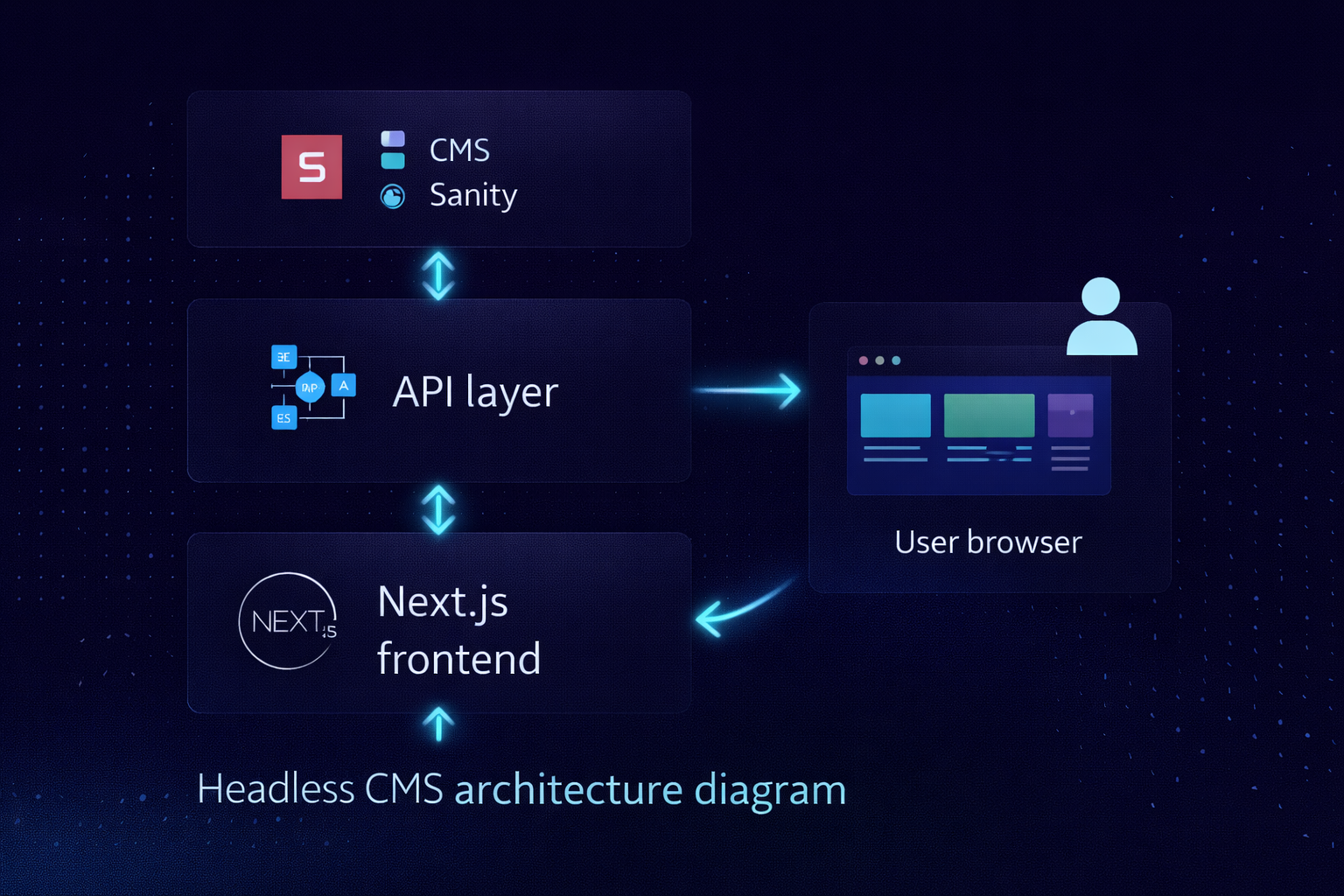
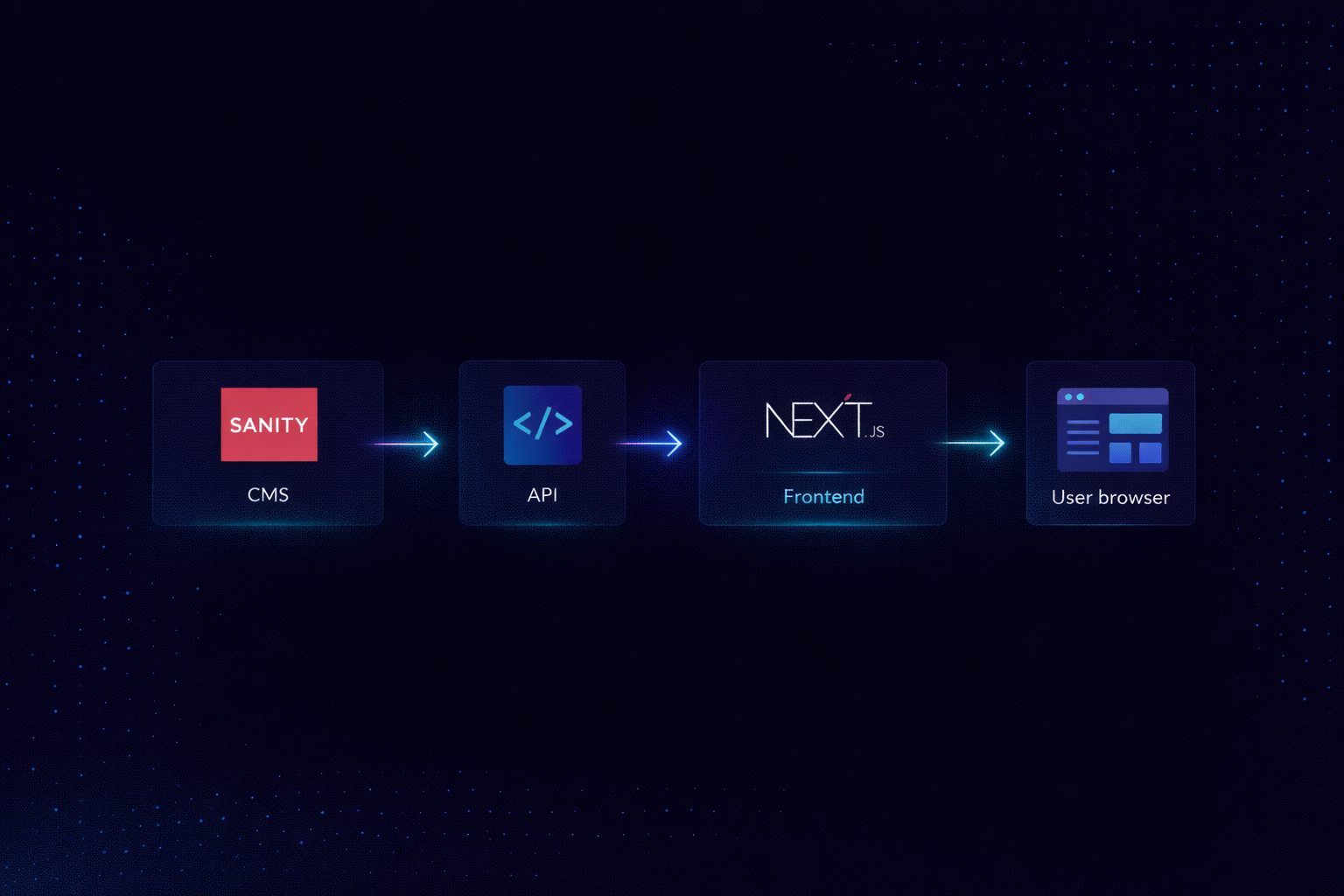
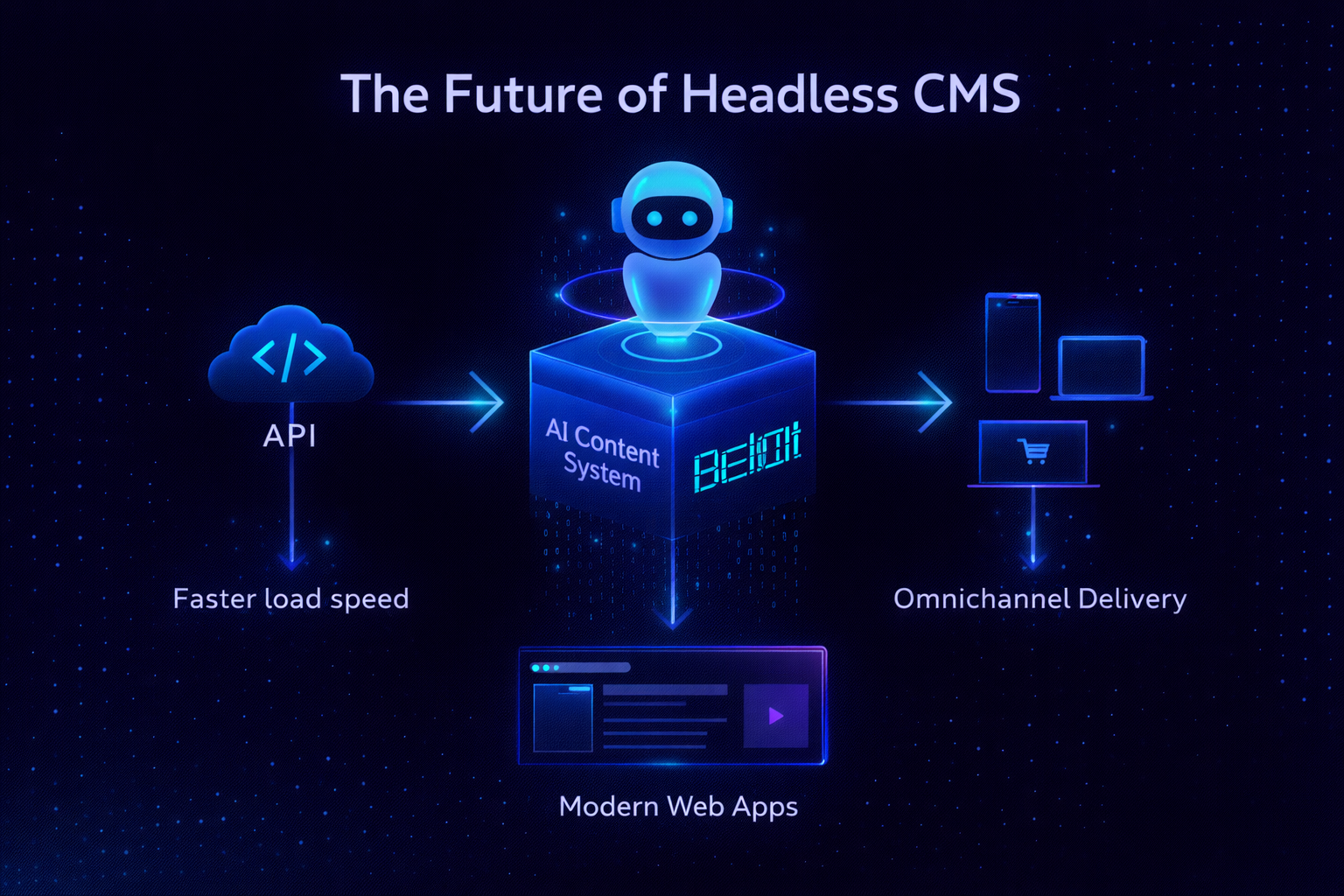
Headless CMS separates content management from frontend rendering.
| Layer | Role |
|---|---|
| CMS | Content storage and modeling |
| API | Content delivery |
| Frontend | UI rendering in Next.js |
This architecture gives engineering teams more control while allowing content teams to work independently.
Sanity vs Contentful vs Storyblok: Quick Comparison
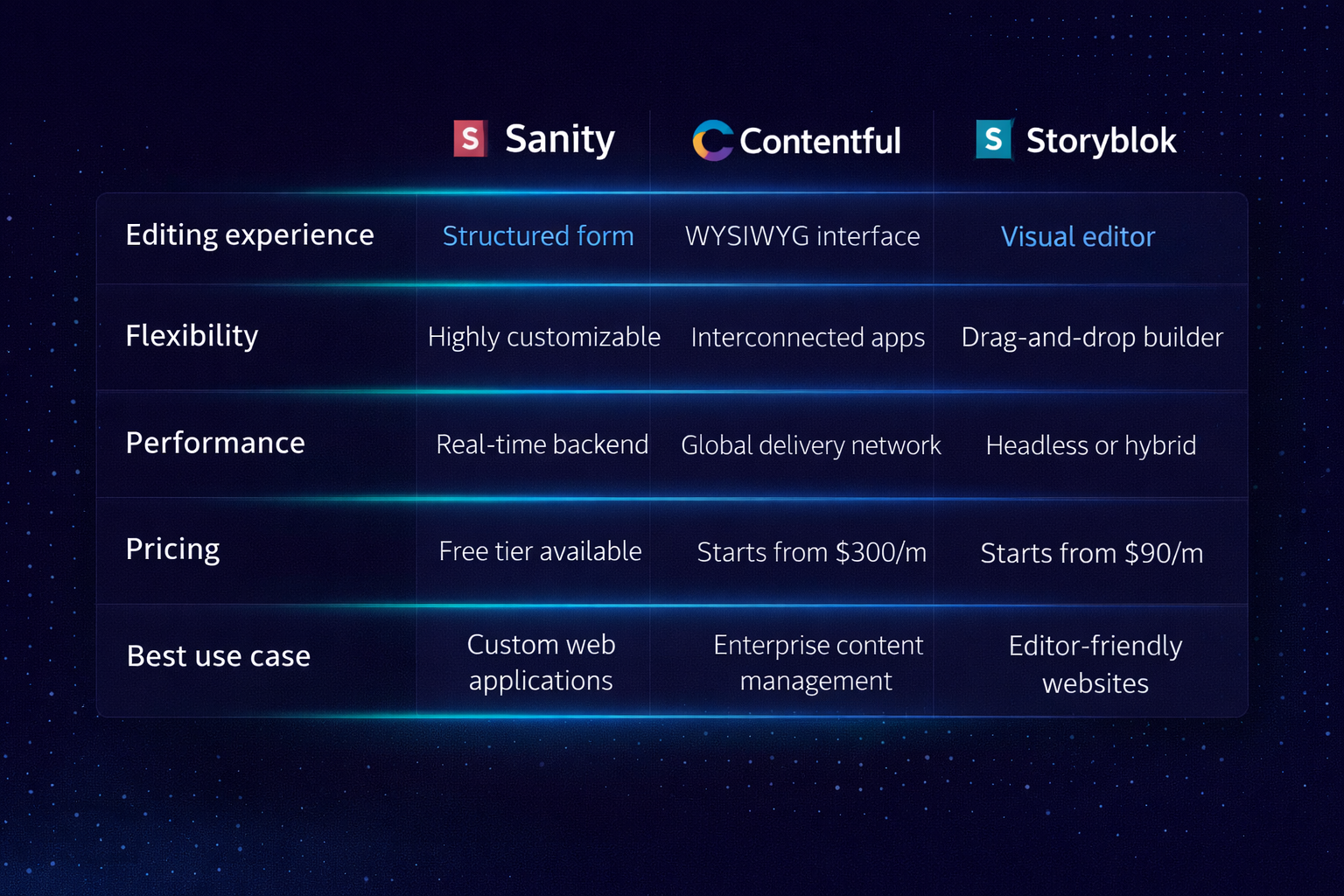
| Feature | Sanity | Contentful | Storyblok |
|---|---|---|---|
| Editing Experience | Real-time | Form-based | Visual |
| Flexibility | Very high | Medium | Medium |
| Developer Control | Excellent | Good | Good |
| Performance with Next.js | Fast | Moderate to fast | Fast |
| Best For | Custom apps and structured content | Enterprise content operations | Marketing-led page building |
At a high level:
- Sanity is strongest when flexibility and structured content matter.
- Contentful is common in larger enterprise environments.
- Storyblok is attractive for visual editing and marketer-friendly workflows.
Sanity CMS Features
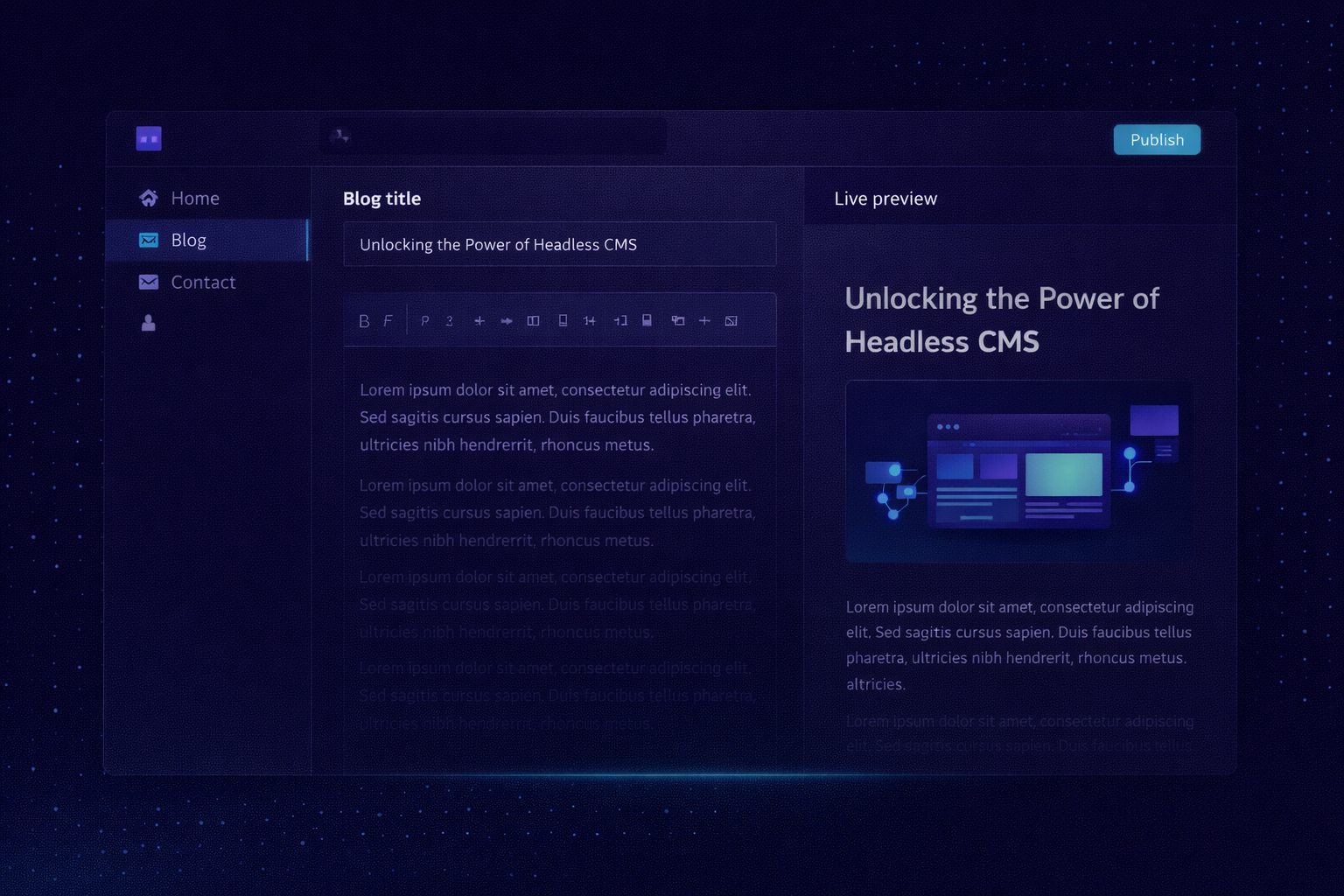
Sanity is built for teams that want developer control without sacrificing editorial usability.
Real-Time Editing
Sanity supports real-time collaboration, which is useful when multiple editors or stakeholders are reviewing content at the same time.
Structured Content
Schemas make it possible to create reusable content models for blogs, landing pages, FAQs, feature sections, and product content.
API-First Design
Sanity works especially well with Next.js because the content structure is programmable and the frontend can stay fully custom.
Best Fit
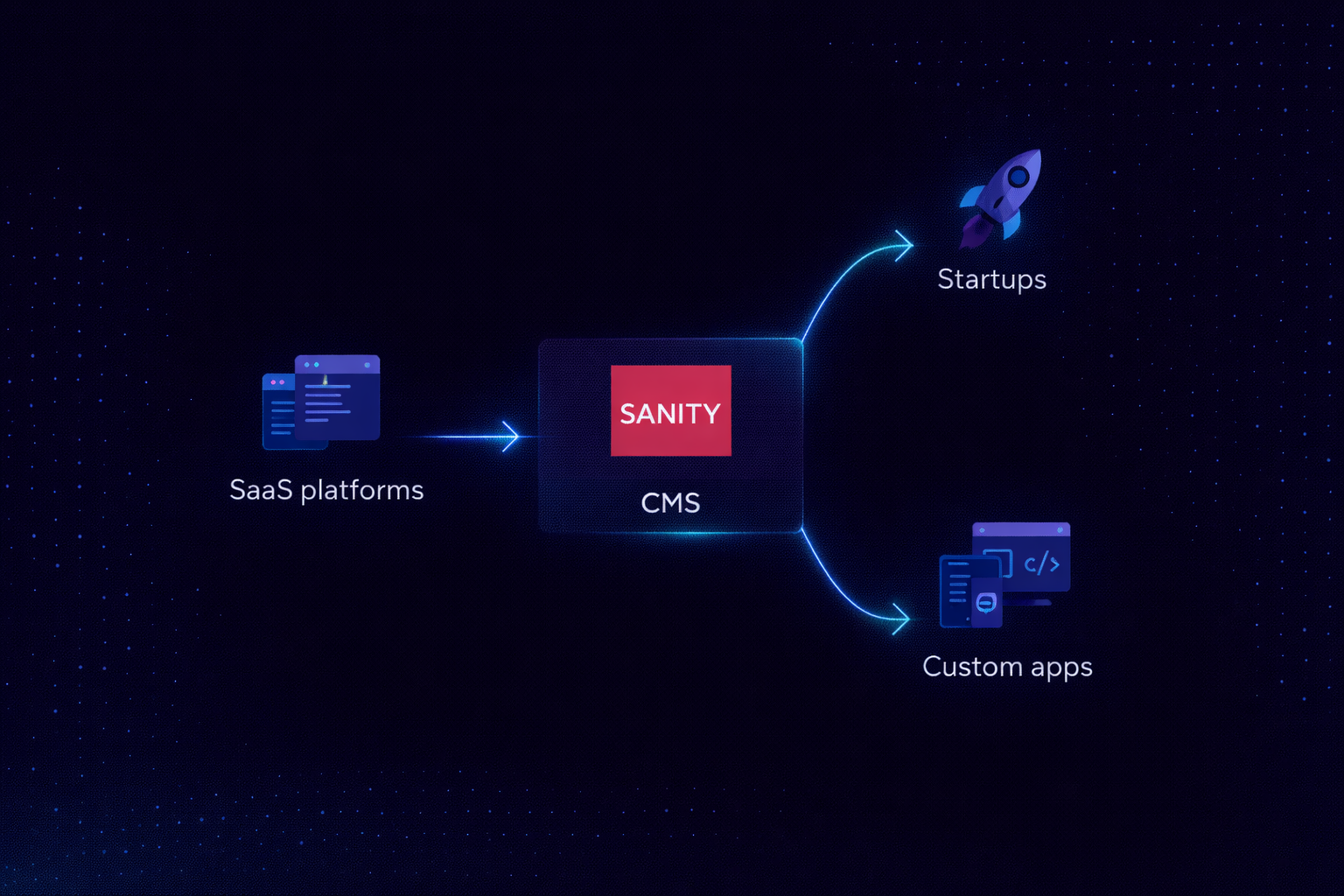
Sanity is usually the best option for:
- SaaS products
- custom applications
- startups building structured content systems
- teams migrating from markdown or WordPress to a scalable headless setup
Contentful Features
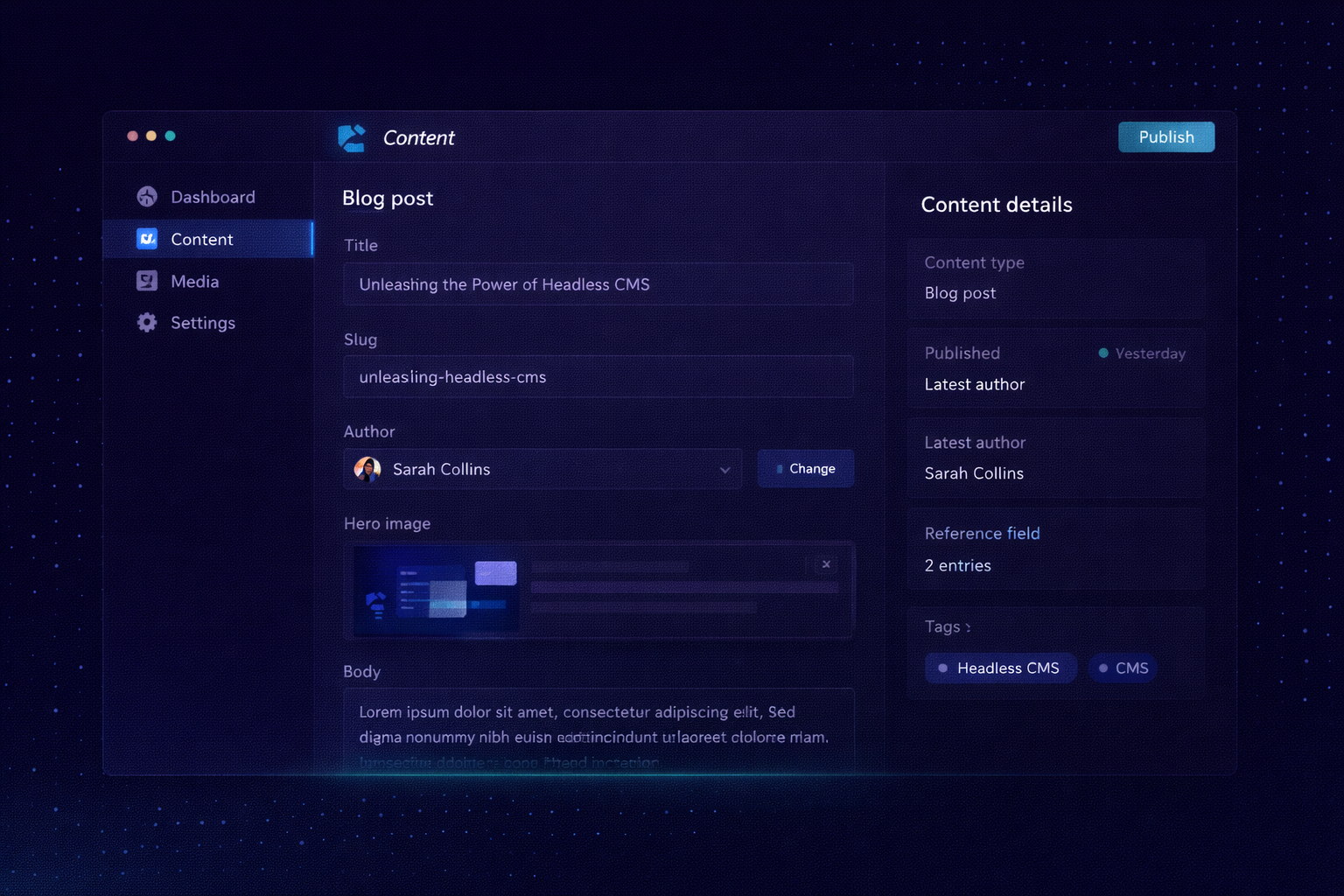
Contentful is widely adopted in enterprise teams that need a stable content platform and broad integration support.
Key Benefits
- scalable infrastructure
- solid API support
- mature enterprise ecosystem
- strong governance for larger organizations
Tradeoffs
Contentful is often less flexible than Sanity for custom content modeling and can become expensive at scale depending on usage and team size.
Best Fit
Contentful is usually a good option for:
- enterprise teams
- larger multi-team content operations
- organizations that prioritize standardization and governance
Storyblok Features
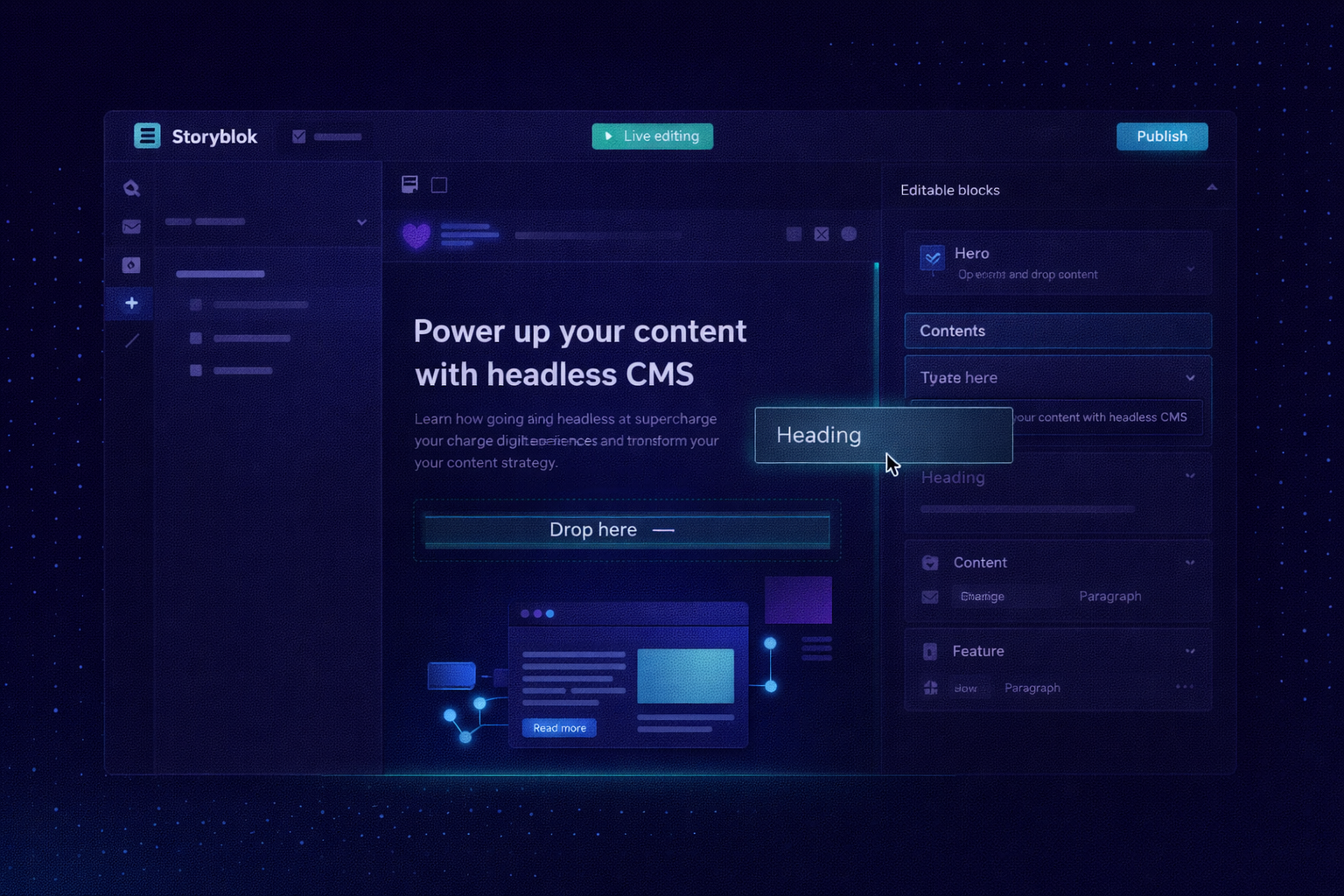
Storyblok is known for its visual editor and is often favored by marketing teams that want more page-building control.
Key Benefits
- visual page editing
- approachable workflow for marketers
- fast publishing for content-heavy campaigns
Tradeoffs
Storyblok is strong for visual page composition, but teams building deeply custom structured systems may still prefer Sanity.
Best Fit
Storyblok works well for:
- marketing teams
- landing-page-driven sites
- businesses prioritizing visual content editing
Next.js and Headless CMS Integration
Next.js improves the value of a headless CMS through:
- Static Site Generation
- Incremental Static Regeneration
- server rendering where needed
- edge delivery and caching
Example query pattern:
const posts = await client.fetch(`*[_type == "post"]`)This separation lets teams optimize frontend performance without locking content into a traditional monolithic CMS.
When to Choose Sanity CMS
Choose Sanity if you need:
- highly structured content
- custom editorial workflows
- strong developer experience
- flexible integration with Next.js
Sanity is generally the strongest option when engineering wants full control over the frontend and the content model needs to evolve over time.
When to Choose Contentful
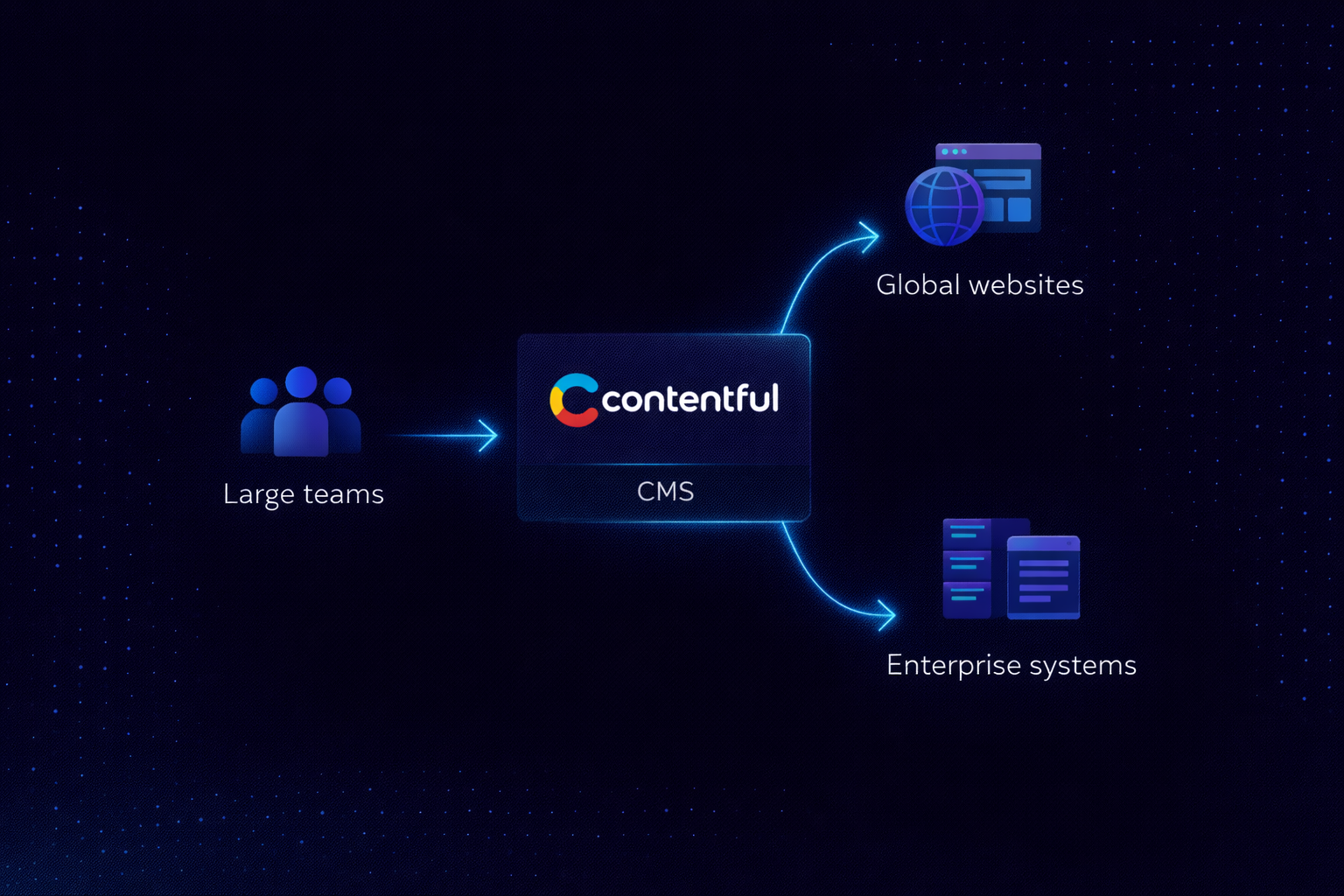
Choose Contentful if you need:
- enterprise-level governance
- mature integrations
- a standardized platform for multiple teams
It is often a better organizational fit than a developer-first fit.
When to Choose Storyblok
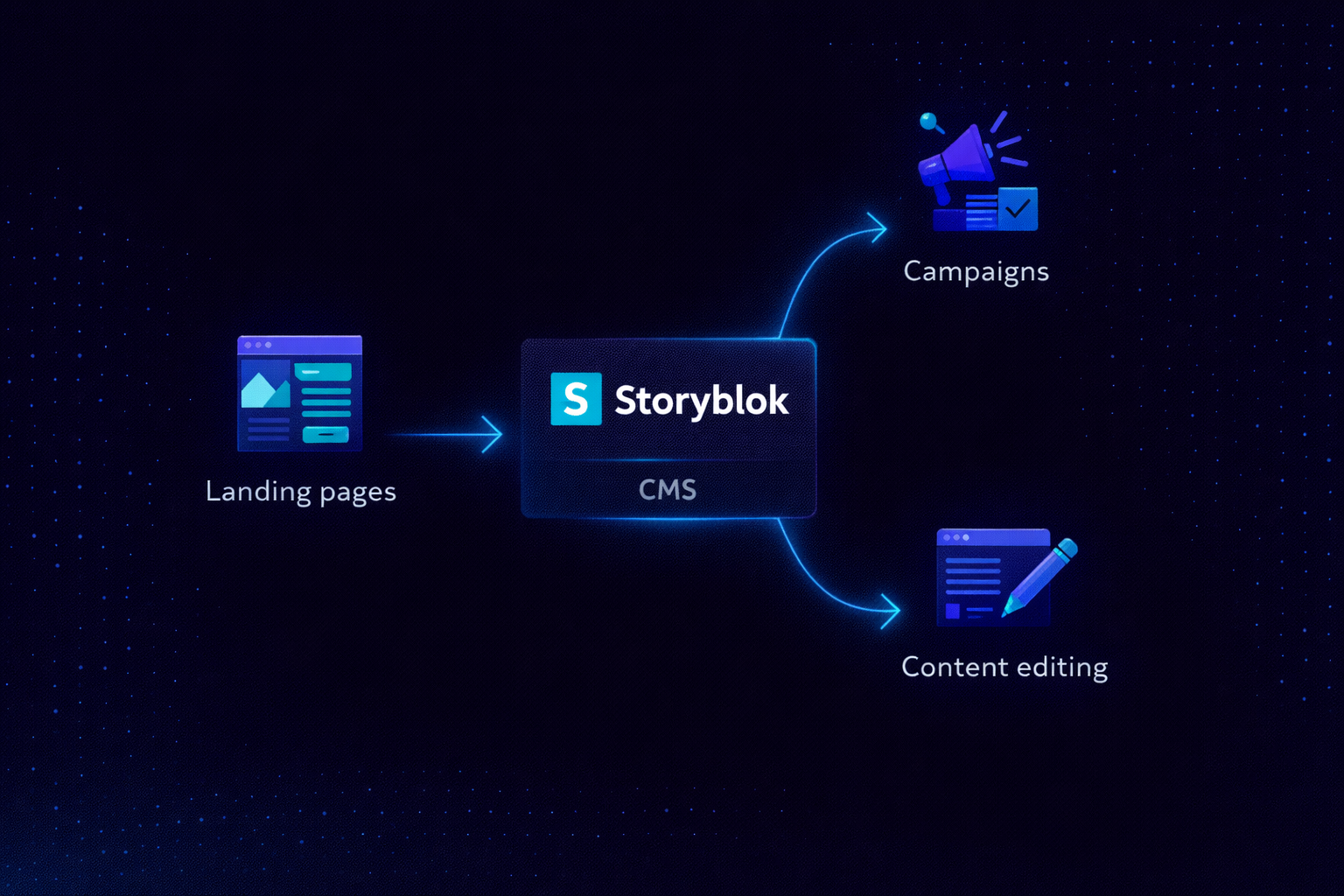
Choose Storyblok if you need:
- visual page editing
- strong marketer control
- faster campaign publishing
For content teams focused on landing pages and visual composition, Storyblok can reduce editorial friction.
Performance Comparison with Next.js
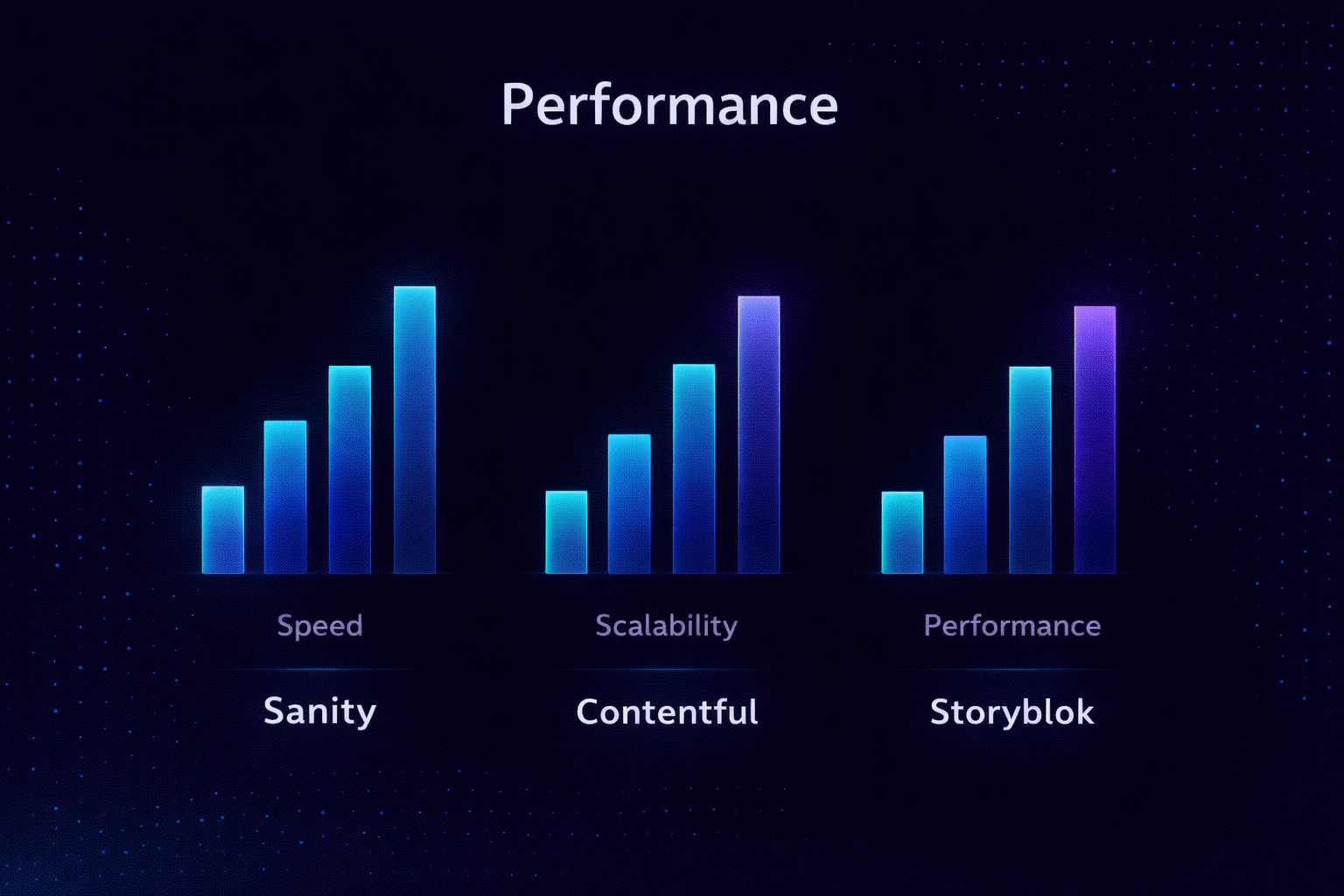
| CMS | Performance with Next.js |
|---|---|
| Sanity | Excellent |
| Contentful | Good |
| Storyblok | Good |
Performance depends on implementation quality, caching strategy, query design, and image optimization, but in many modern Next.js builds:
- Sanity performs extremely well with structured queries and custom rendering
- Storyblok can perform well for content-heavy visual sites
- Contentful is solid, though teams may need to optimize around API usage and content model complexity
SEO Benefits of Headless CMS
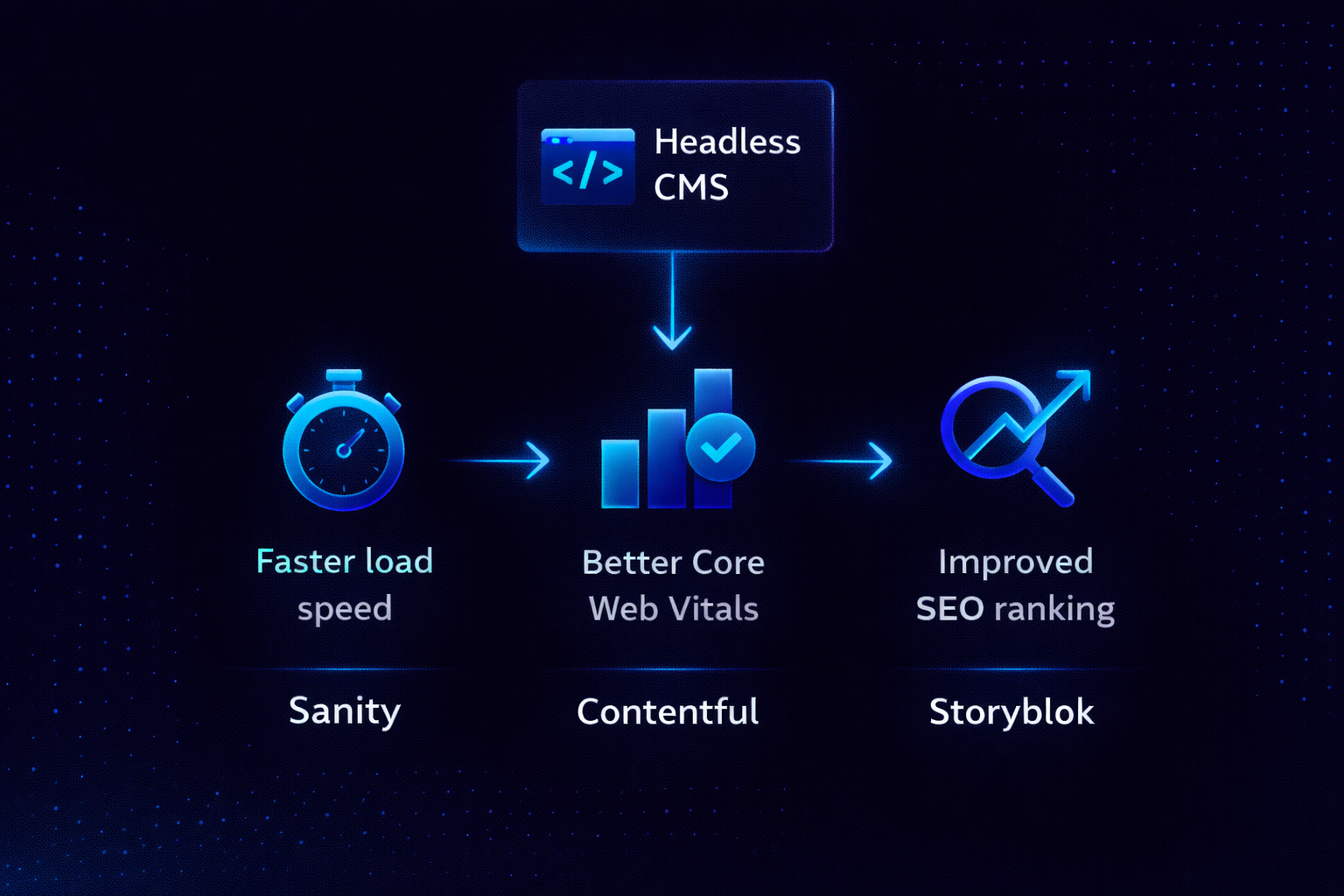
A well-implemented headless CMS can support stronger SEO by enabling:
- faster page loads
- better Core Web Vitals
- cleaner metadata control
- structured content reuse
- easier schema implementation
With Next.js, this becomes especially valuable for:
- marketing sites
- blog systems
- documentation hubs
- multilingual content setups
Conclusion
Sanity, Contentful, and Storyblok all have strengths.
If your priority is:
- developer flexibility: choose Sanity
- enterprise process and governance: choose Contentful
- visual editing for marketing teams: choose Storyblok
For most modern Next.js builds, Sanity offers the best balance of flexibility, performance, and long-term scalability.
Related pages: