When Agencies Use Overflow Developers Instead of Hiring Full-Time
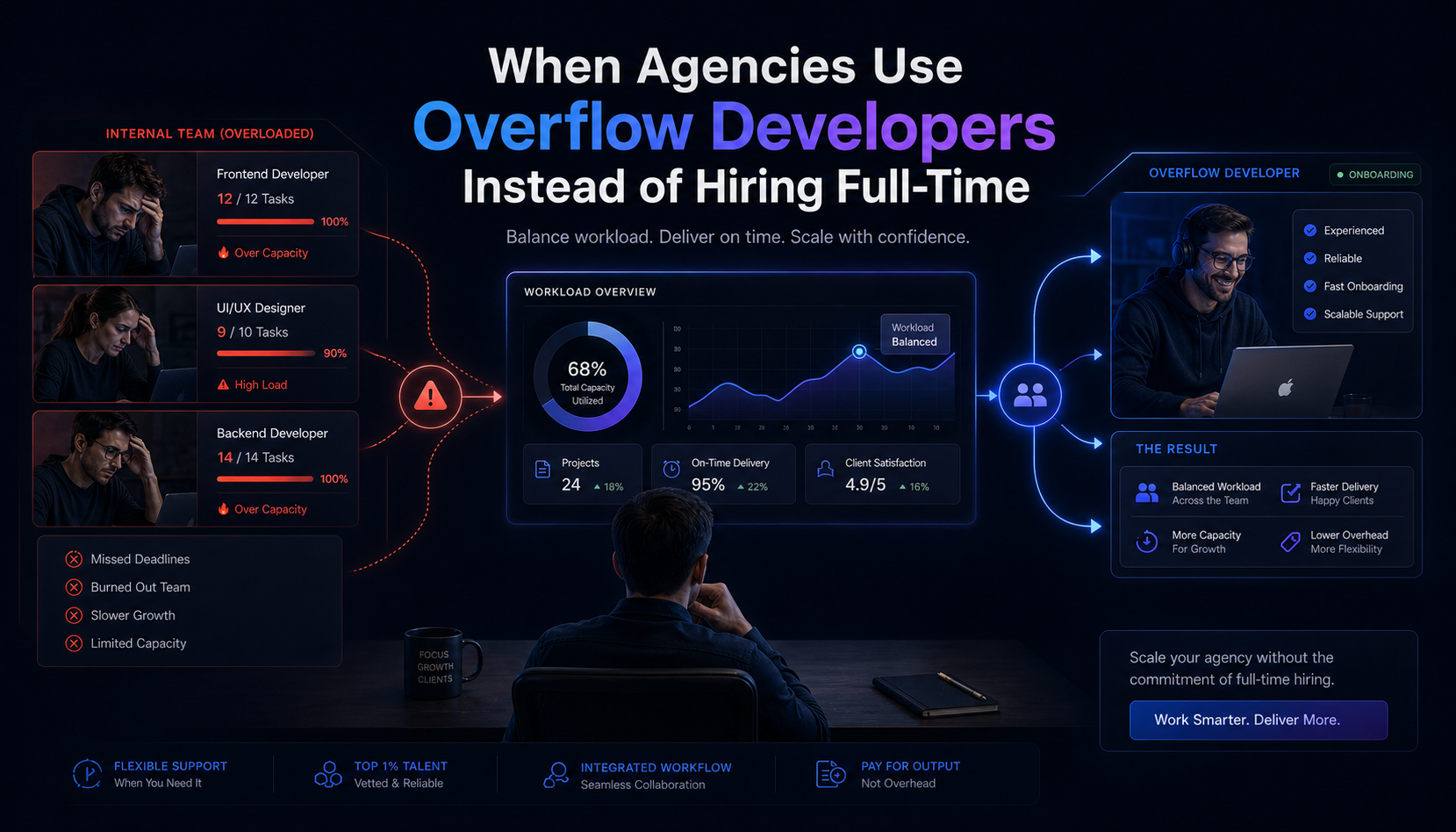
Agencies do not always need another full-time developer.
Sometimes they simply need:
- a reliable extra hand
- faster delivery during busy periods
- backend or CMS work moved forward
- temporary support on client projects
- execution capacity without long-term overhead
That is where overflow developers become valuable.
This model is not about replacing a core team.
It is about giving agencies more capacity when client demand grows faster than hiring can keep up.
In 2026, more agencies are choosing flexible talent models because speed matters more than headcount.
Why More Agencies Are Avoiding Full-Time Hiring Too Early
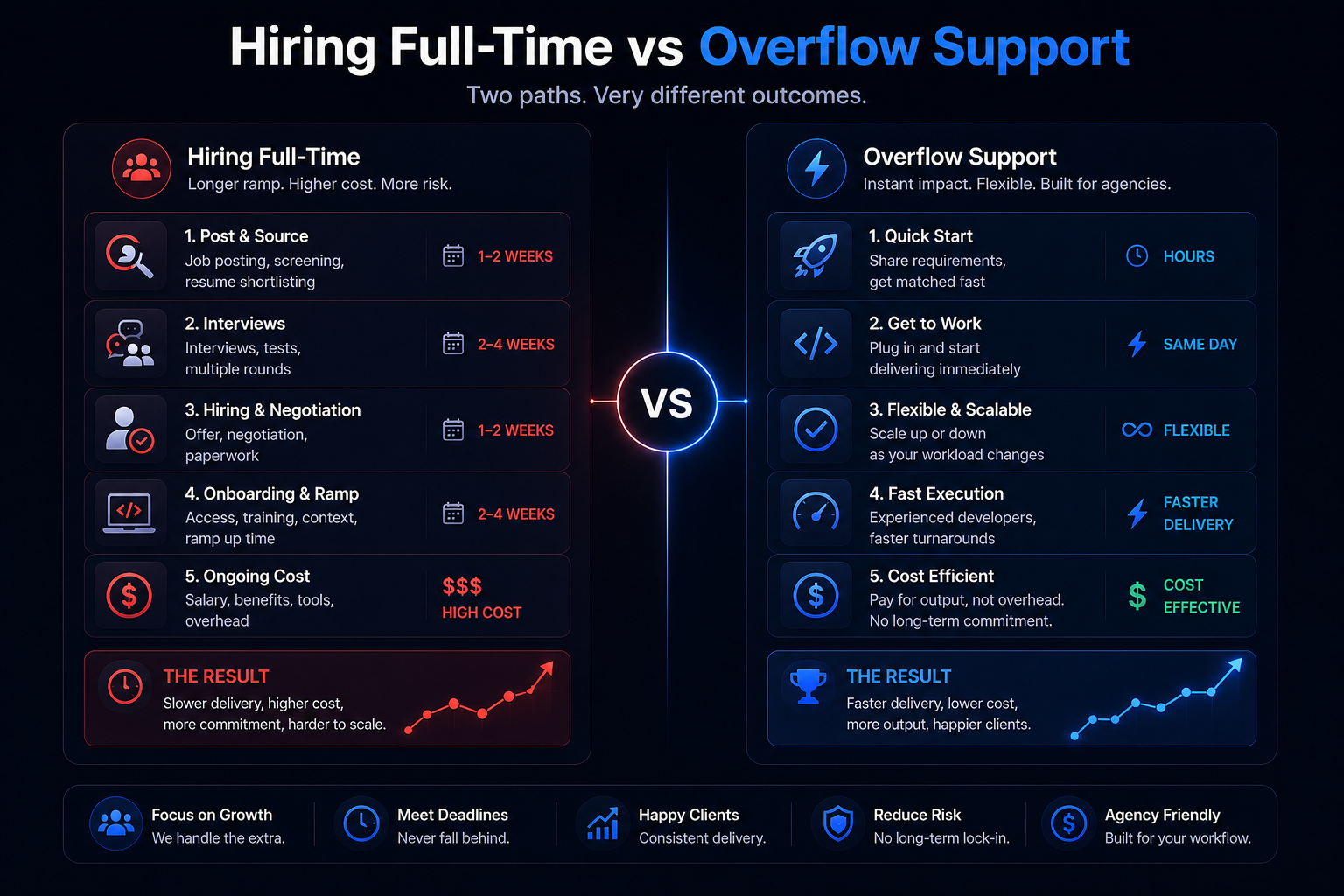
Hiring a full-time developer sounds simple, but in reality it often includes:
- job posting and recruitment time
- interviews and technical screening
- onboarding delays
- salary commitments
- benefits and long-term overhead
- risk of bad hires
For many agencies, this creates friction.
Especially when demand is inconsistent.
Overflow developers solve this by allowing agencies to scale delivery first, then hire later if needed.
What Is an Overflow Developer?
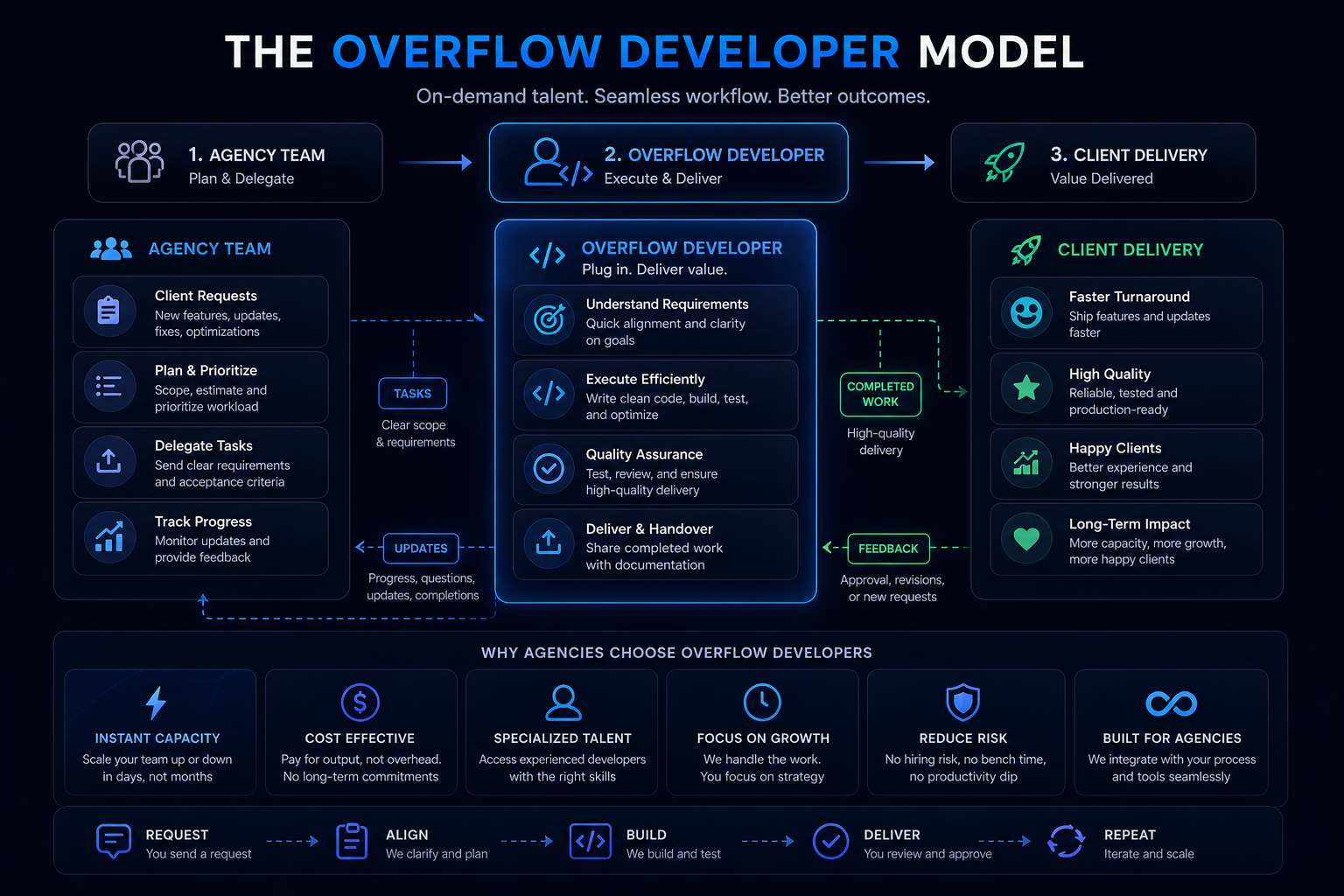
An overflow developer is an external technical partner who helps agencies complete work when internal teams are at capacity.
They usually support:
- short-term delivery spikes
- client launches
- backend integrations
- CMS implementation
- bug fixing sprints
- technical cleanup work
Think of it as on-demand execution capacity.
When the Overflow Model Makes Sense
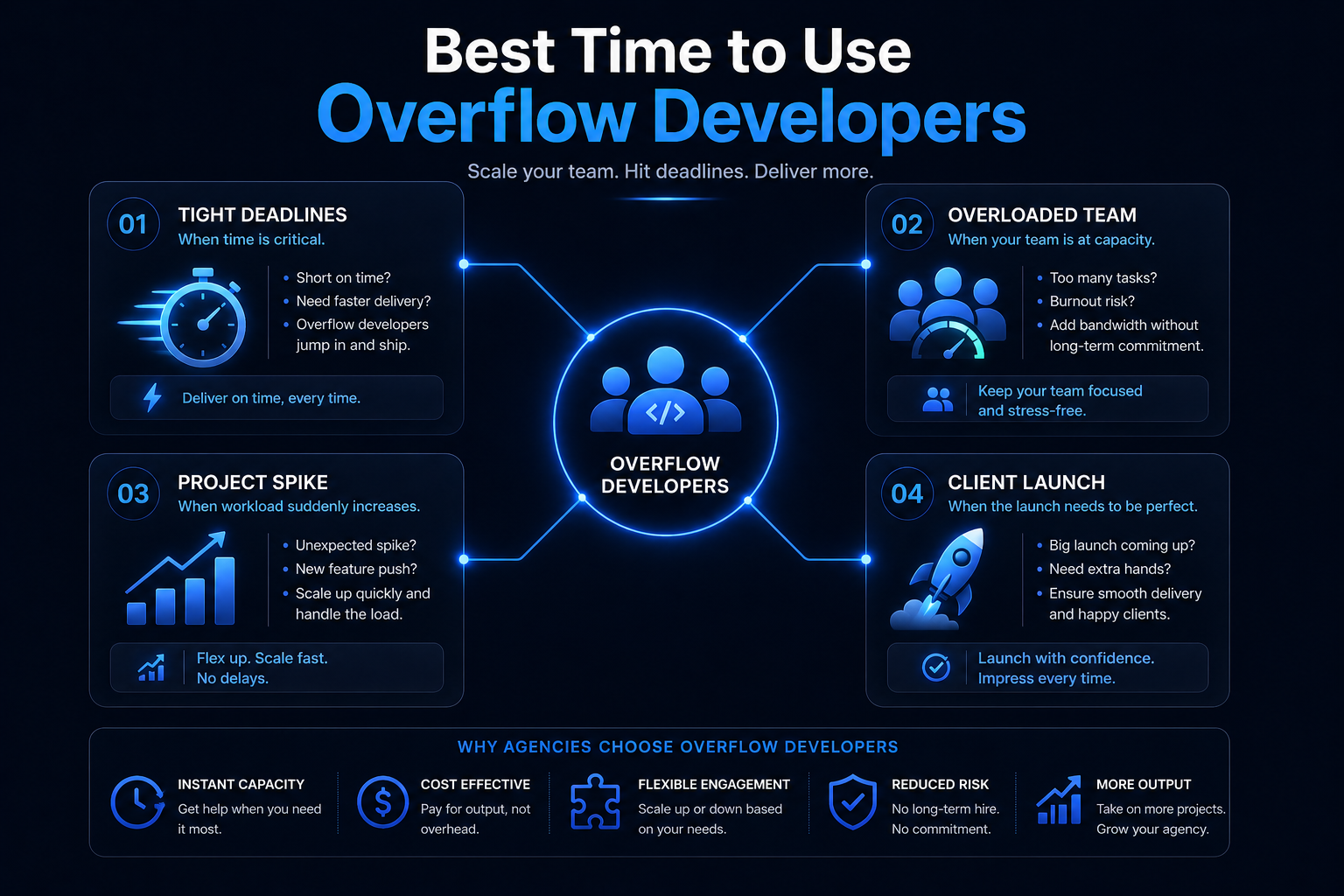
The best time to bring in overflow support is usually when:
- project demand has spiked
- timelines are tight
- internal developers are overloaded
- one client project needs focused help
- the agency does not want to commit to a permanent hire yet
For many teams, this is the lowest-friction way to keep delivery moving.
Real Agency Growth Data (Why This Model Is Rising)
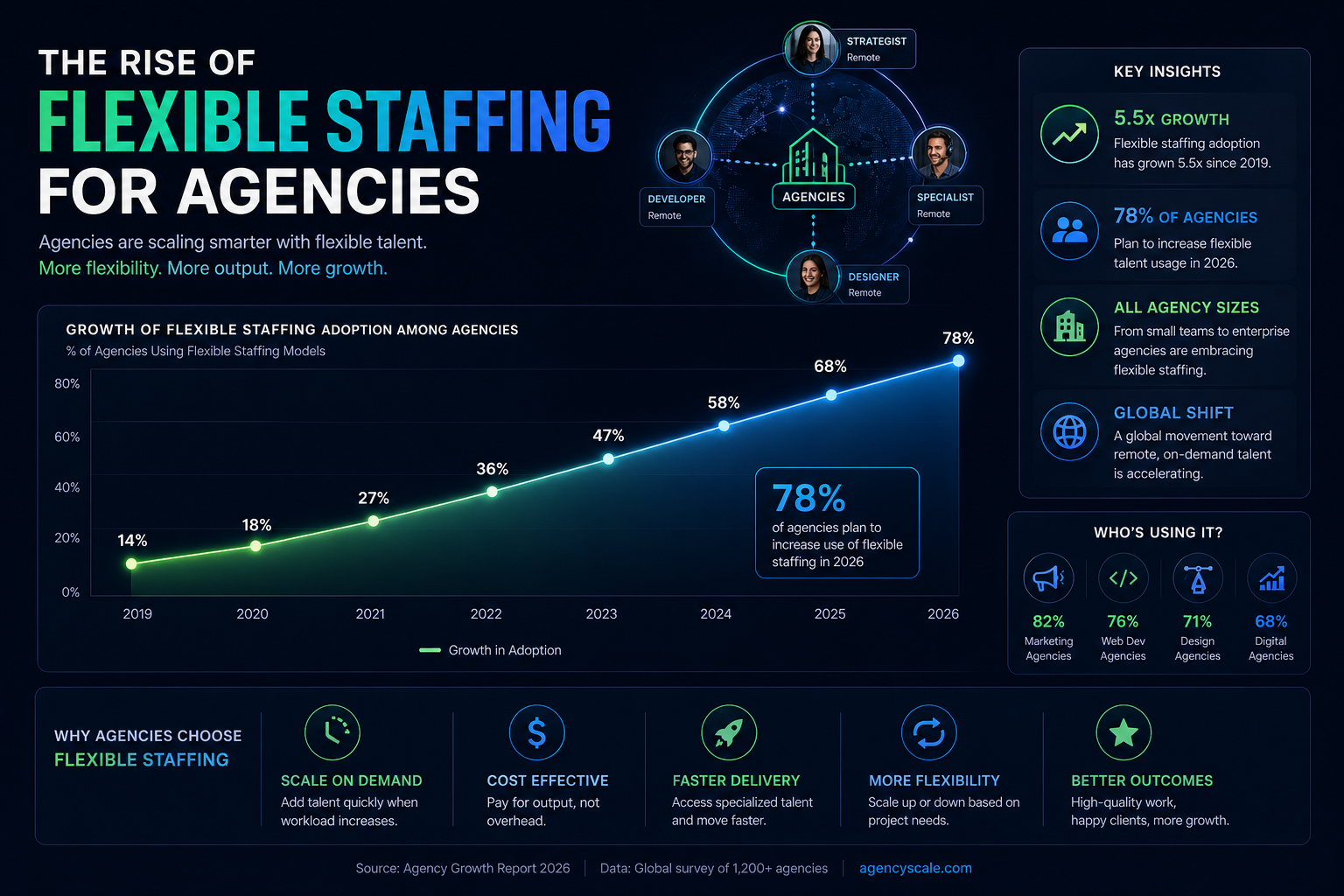
Across service businesses, flexible staffing models are growing because agencies want:
- lean operations
- better profit margins
- lower hiring risk
- faster execution
Many agencies now blend:
| Team Type | Purpose |
|---|---|
| Internal team | Strategy + client management |
| Overflow support | Delivery capacity |
| Specialists | Advanced projects |
This hybrid model is becoming common among high-performing agencies.
What Work Fits Overflow Support Best
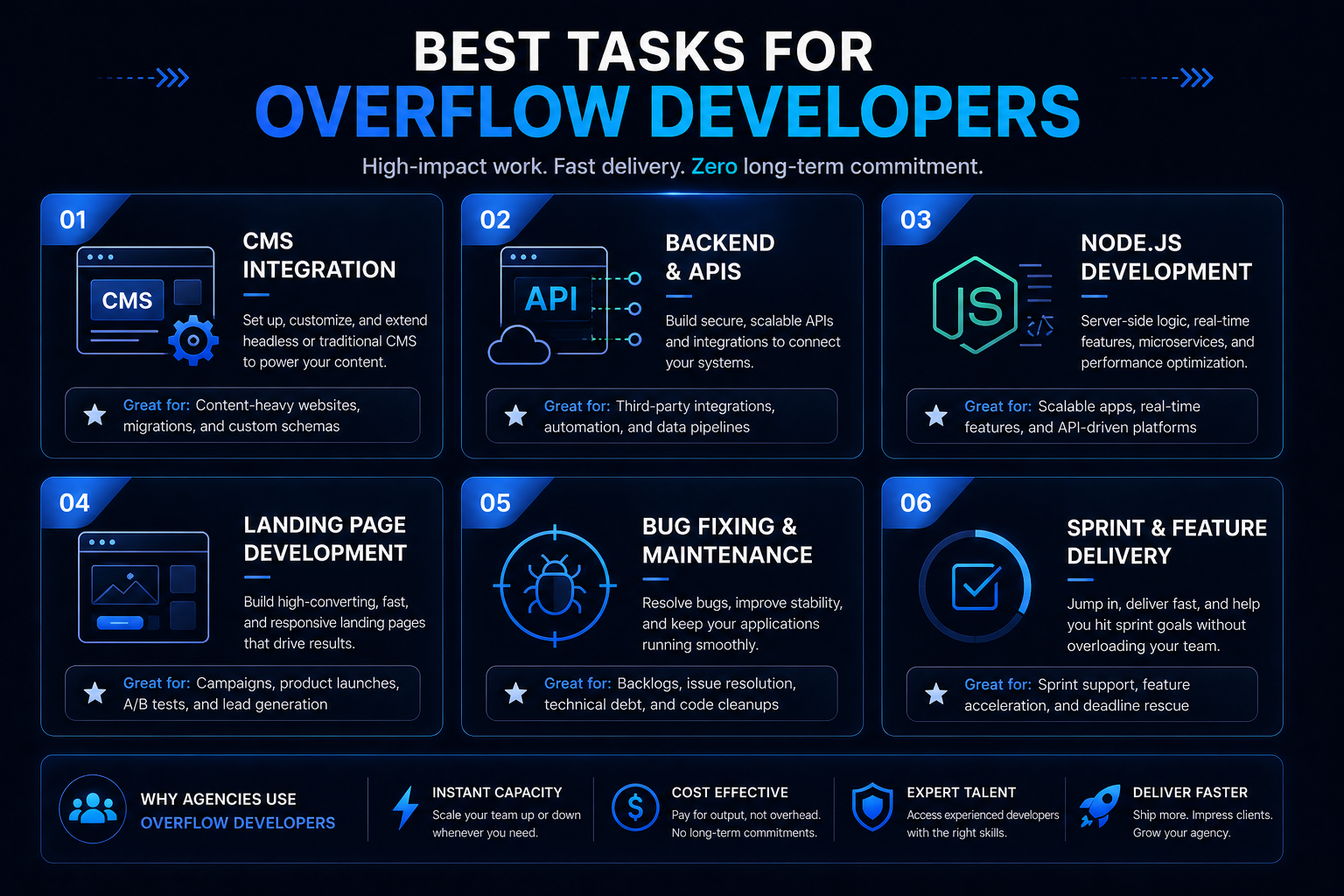
Overflow help works especially well for:
- CMS integration and migration work
- backend / API delivery
- landing page implementation
- Node.js development
- Sanity CMS setup
- technical SEO fixes
- short sprints blocking the core team
This is why services like:
- Agency Overflow Support
- Node.js Backend Help
- Sanity CMS Integration
are increasingly in demand.
Why Agencies Prefer This Over Hiring Too Early
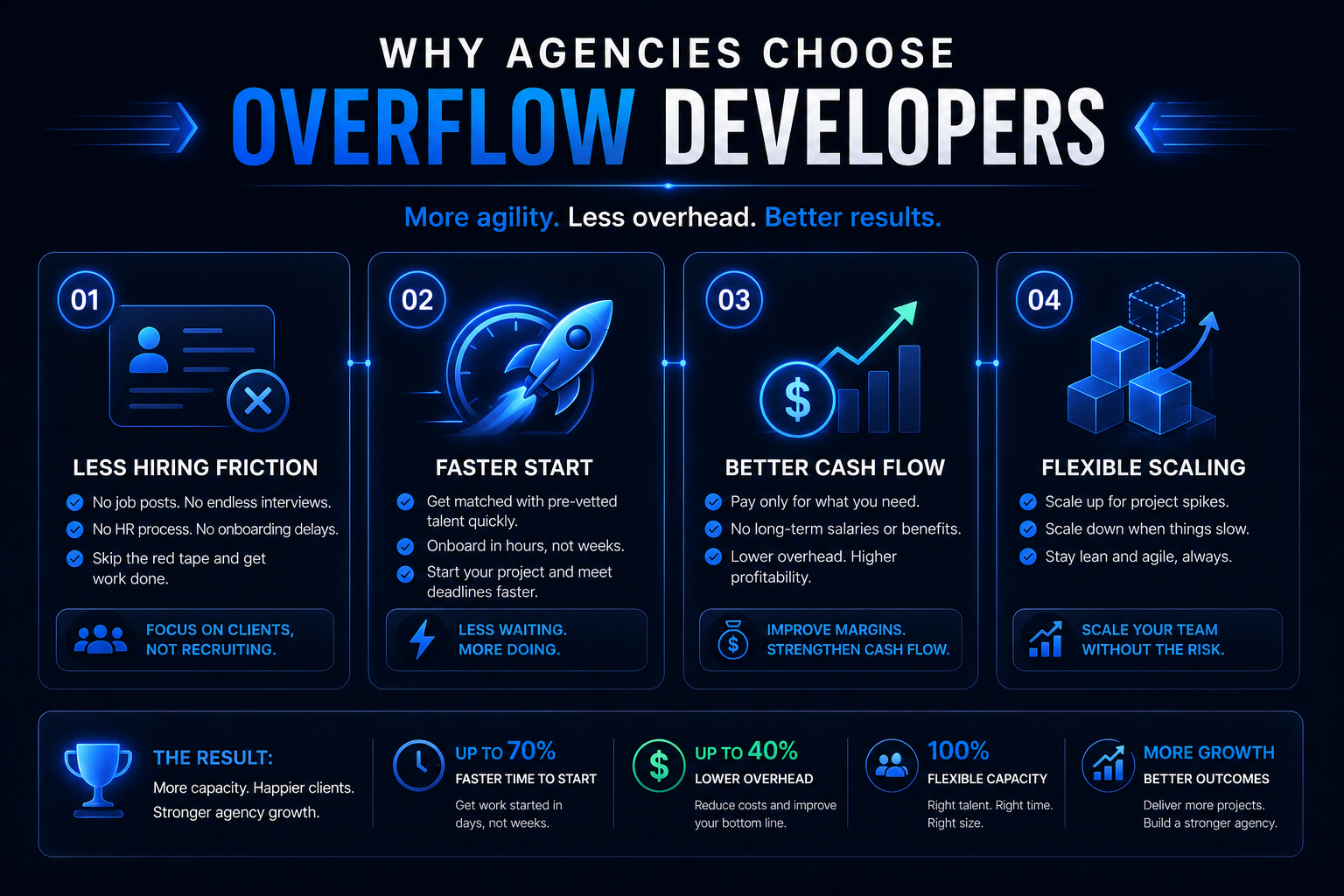
Less Hiring Friction
Hiring full-time takes time.
Overflow support can start faster.
Easier to Test Fit
Agencies can start with:
- one sprint
- one scoped task
- one client project
before committing further.
Better for Uneven Workloads
Agency demand is rarely consistent.
Overflow support lets teams add capacity only when needed.
Protects Cash Flow
No unnecessary permanent payroll costs during slow months.
Overflow vs Full-Time Hire (Comparison)
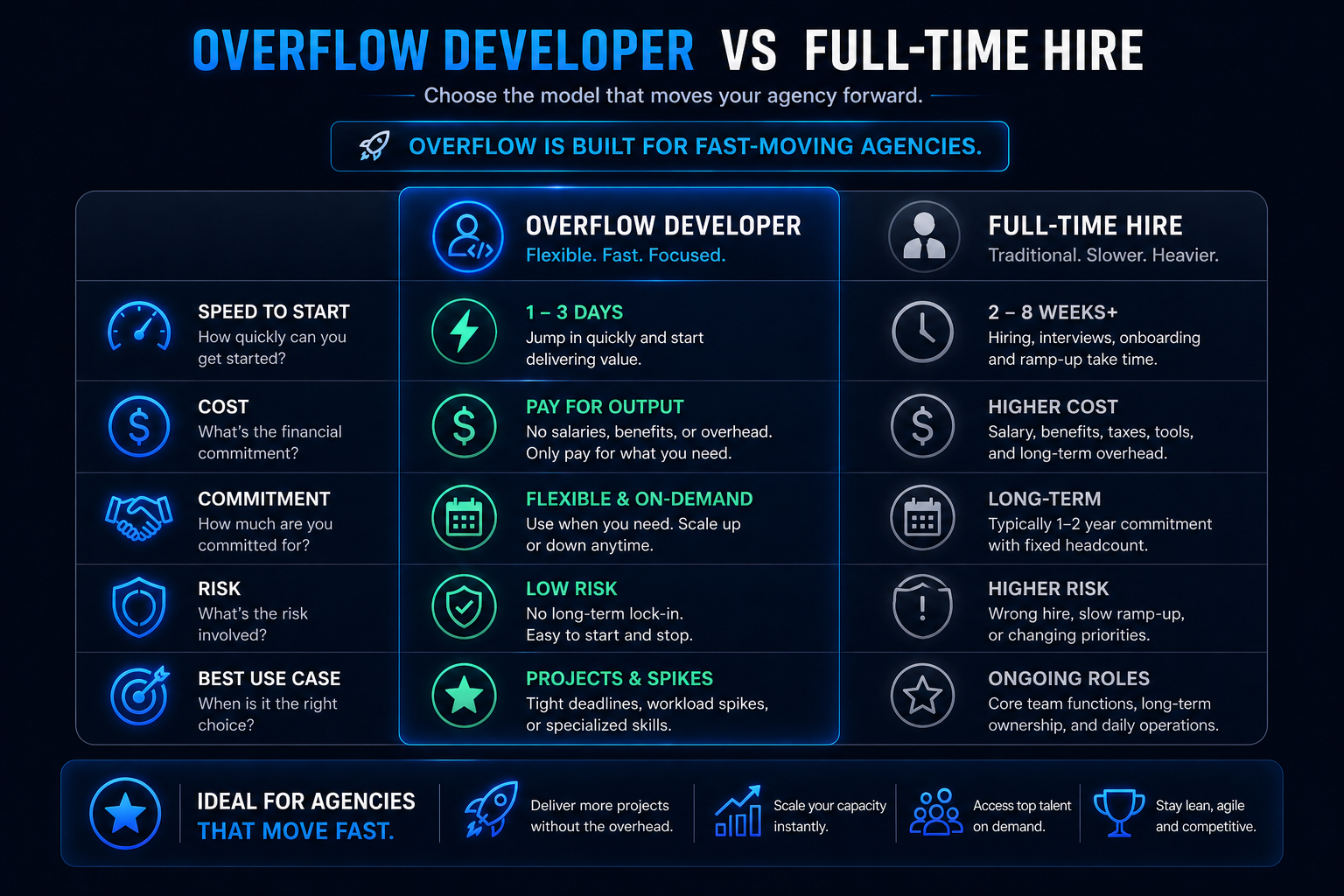
| Factor | Overflow Developer | Full-Time Hire |
|---|---|---|
| Speed to Start | Fast | Slow |
| Commitment | Flexible | Long-term |
| Overhead | Low | High |
| Best For | Delivery spikes | Consistent workload |
| Risk | Lower | Higher |
For many growing agencies:
👉 Overflow first
👉 Hire later when workload stabilizes
What Makes Overflow Support Actually Work
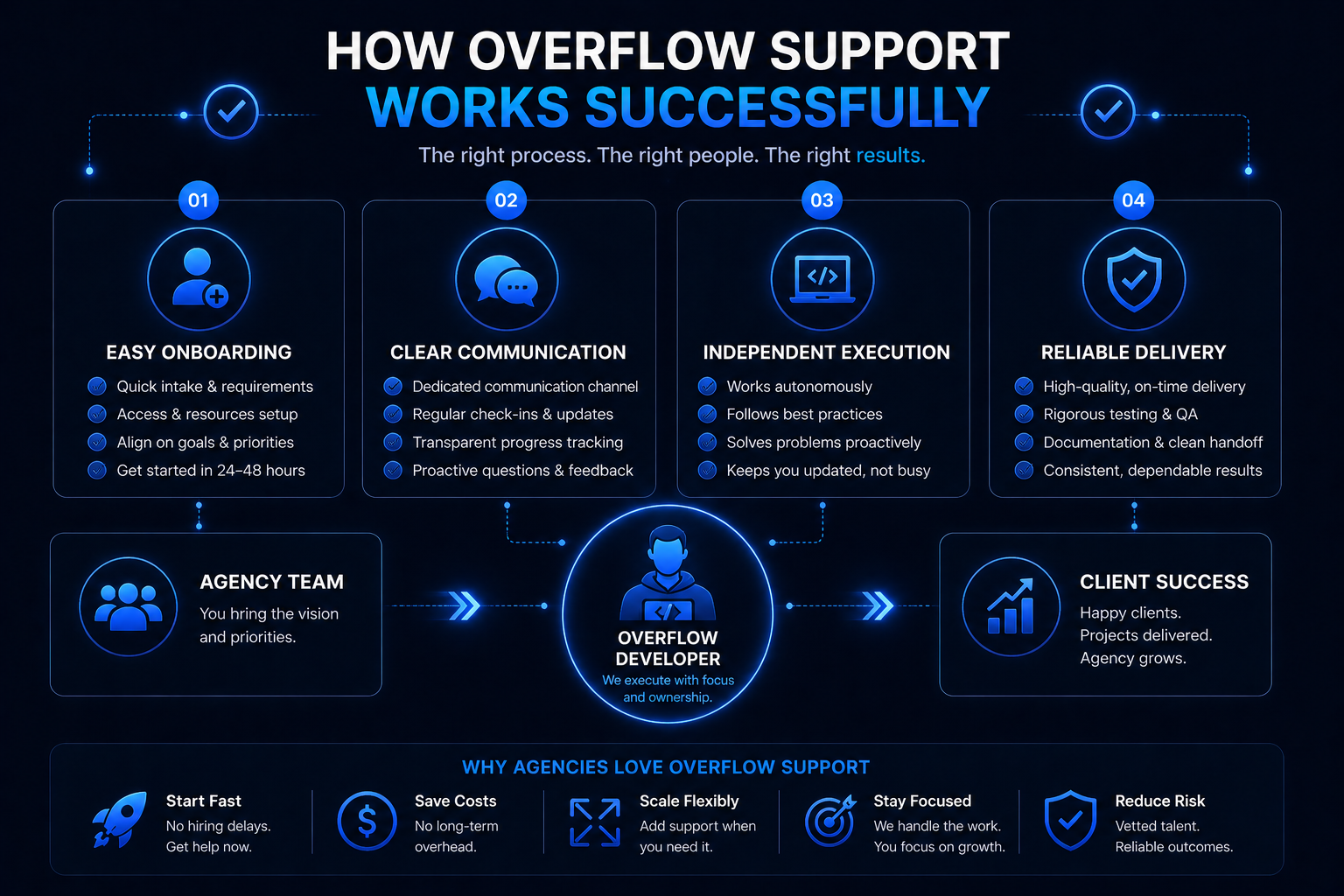
The model works best when the developer is:
- easy to onboard
- clear in communication
- comfortable with scoped delivery
- able to ship independently
- reliable with deadlines
Without that, overflow support adds coordination cost.
With the right fit, it reduces it.
Common Agency Use Cases
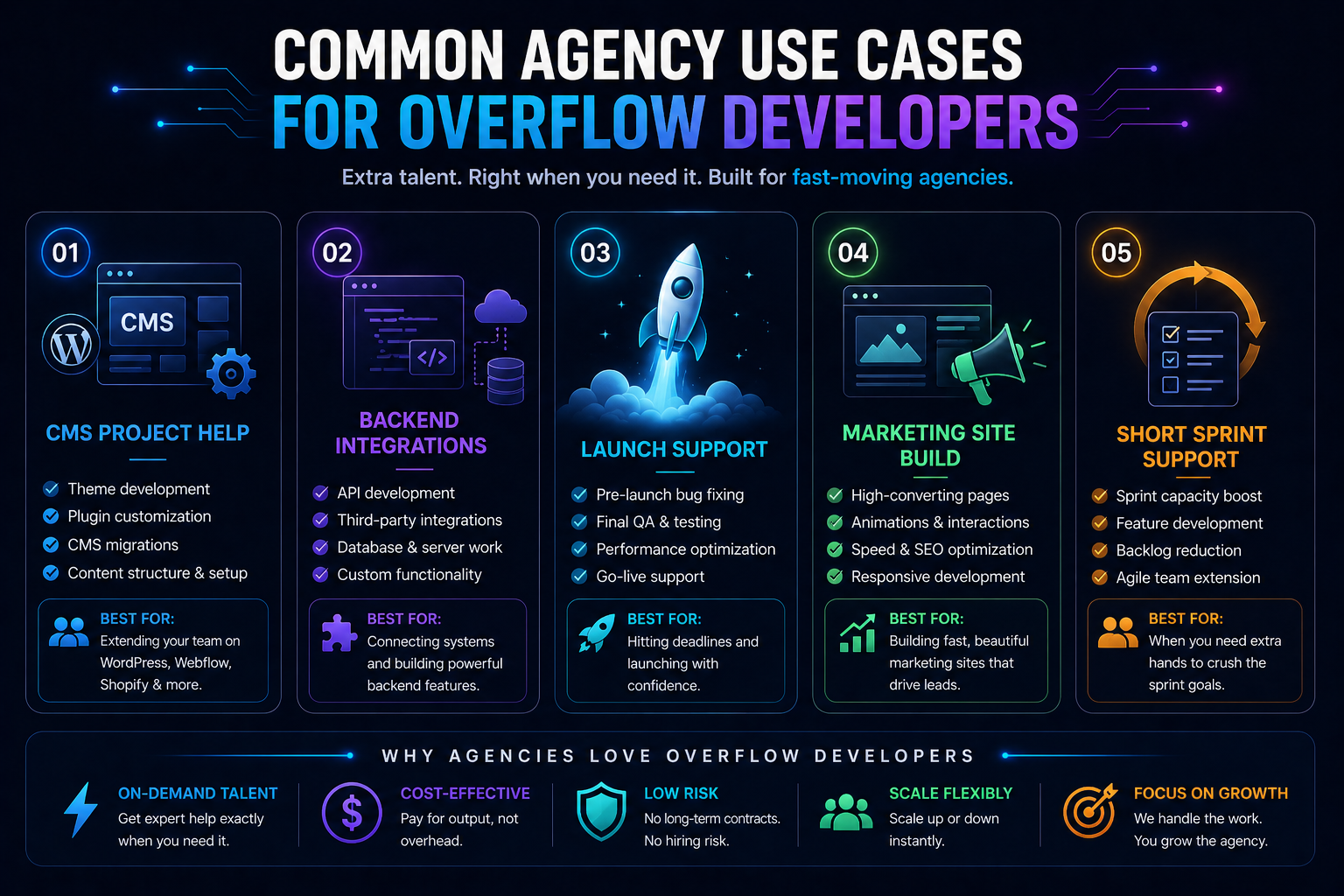
Typical situations include:
- a CMS project needs implementation help
- backend integration is blocking launch
- internal team tied up on another client
- marketing site needs structured CMS support
- product build needs extra execution for 2–4 weeks
These are not always:
Hire someone forever
They are often:
Help us deliver this properly
How to Know If You Should Hire Instead
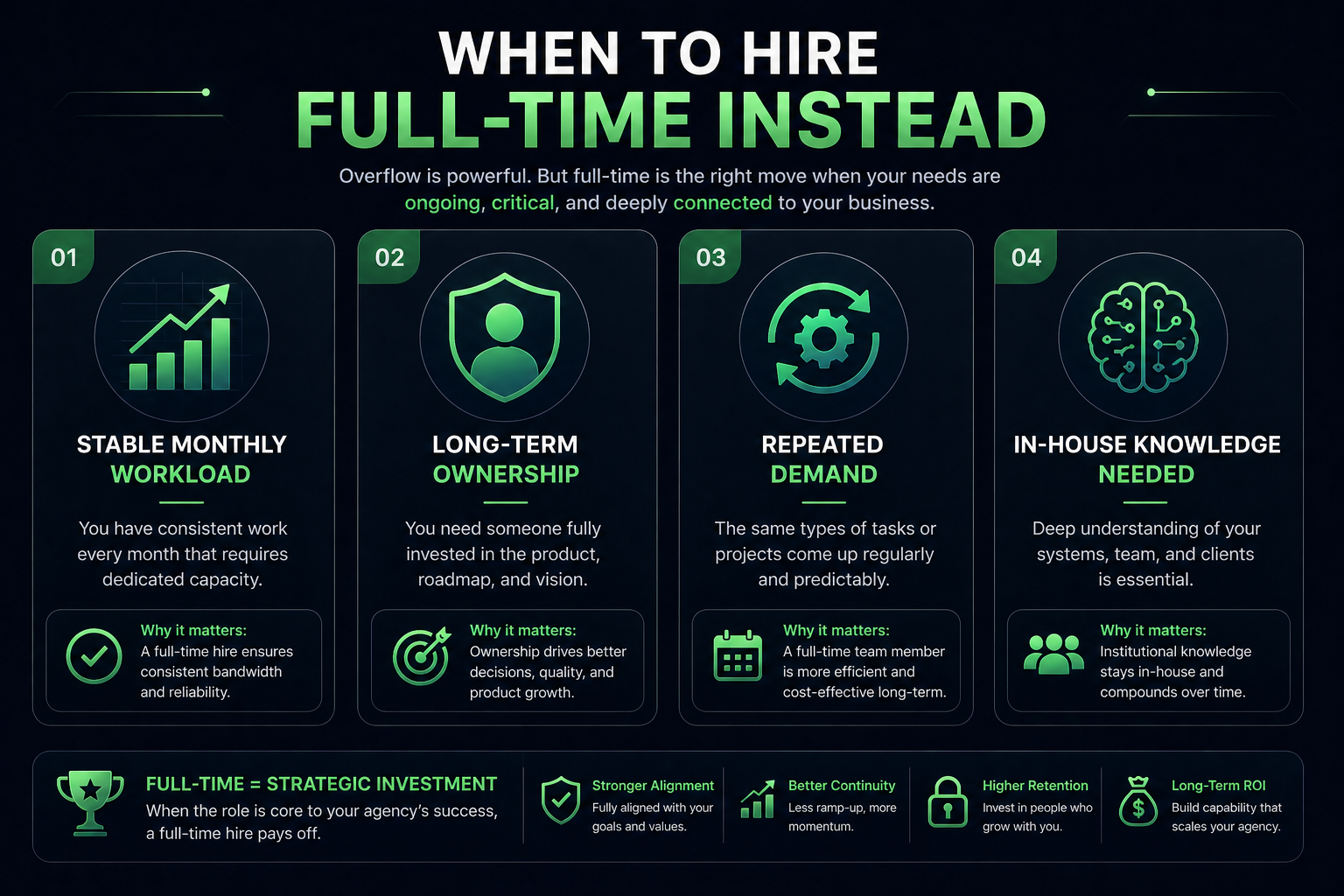
You may need a full-time hire when:
- workload is stable every month
- repeated overflow demand continues for 6+ months
- internal knowledge must stay in-house
- long-term product ownership is required
Then hiring becomes the smarter move.
Where This Connects to Your Site
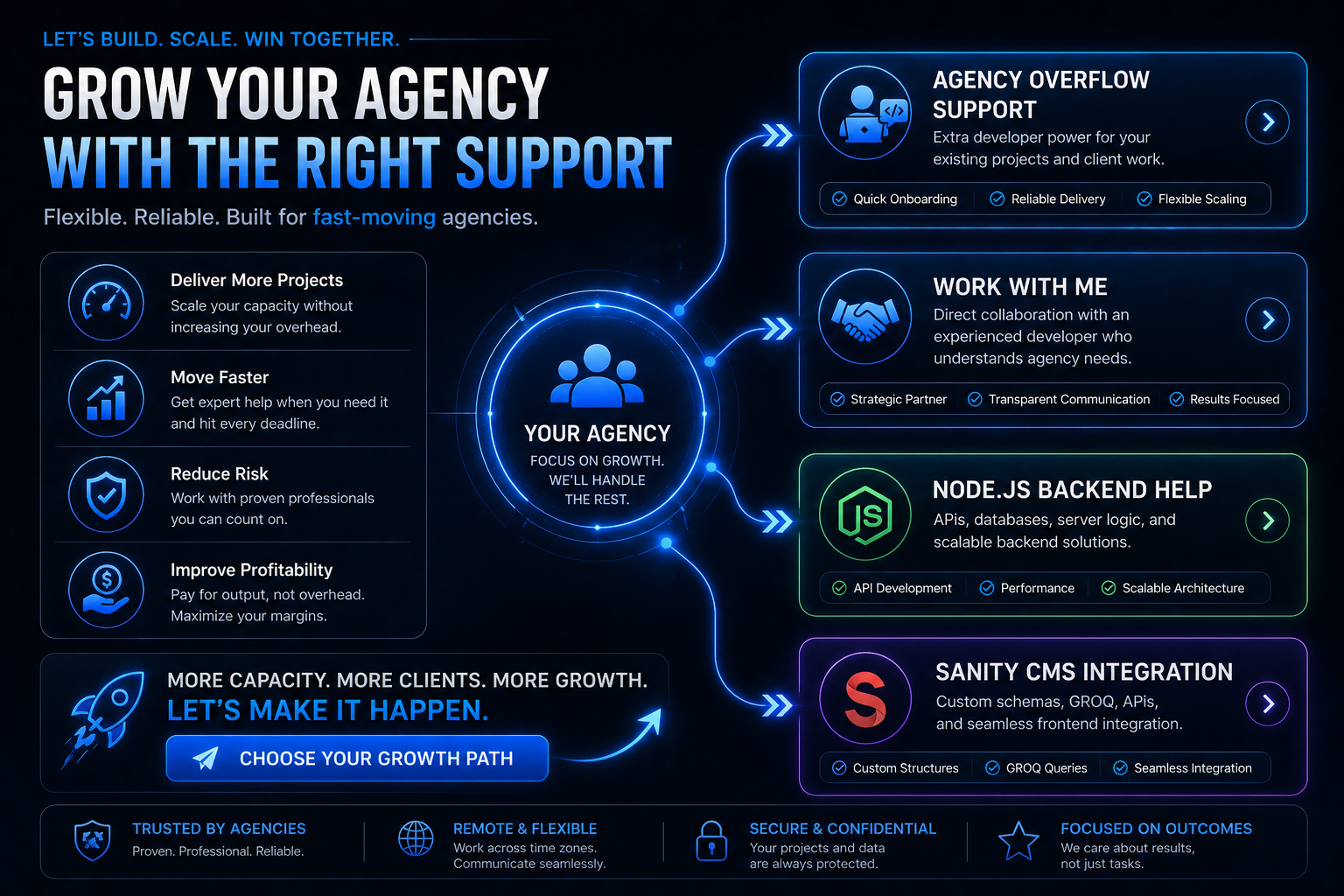
If your agency is facing delivery pressure, the strongest next pages are:
- Agency Overflow Support
- Work With Me
- Sanity CMS Integration
- Node.js Backend Help
This keeps the path from education to action short.
Conclusion
Overflow support works best when an agency already has demand and simply needs dependable execution capacity.
It is not a replacement for every full-time hire.
But it is often the smartest move before making one.
For many agencies in 2026:
👉 Stay lean
👉 Deliver faster
👉 Hire later when ready
If that sounds like your current situation, start with:
- Agency Overflow Support
- Work With Me
- Node.js Backend Help