When Marketing Teams Need a CMS Without Developer Bottlenecks
A marketing team should not need a developer to change one sentence on a live page.
But that is still how many websites work.
A campaign changes, a CTA needs updating, a testimonial has to be swapped, or a page section needs to be reordered, and suddenly a simple content request becomes another item in the developer queue.
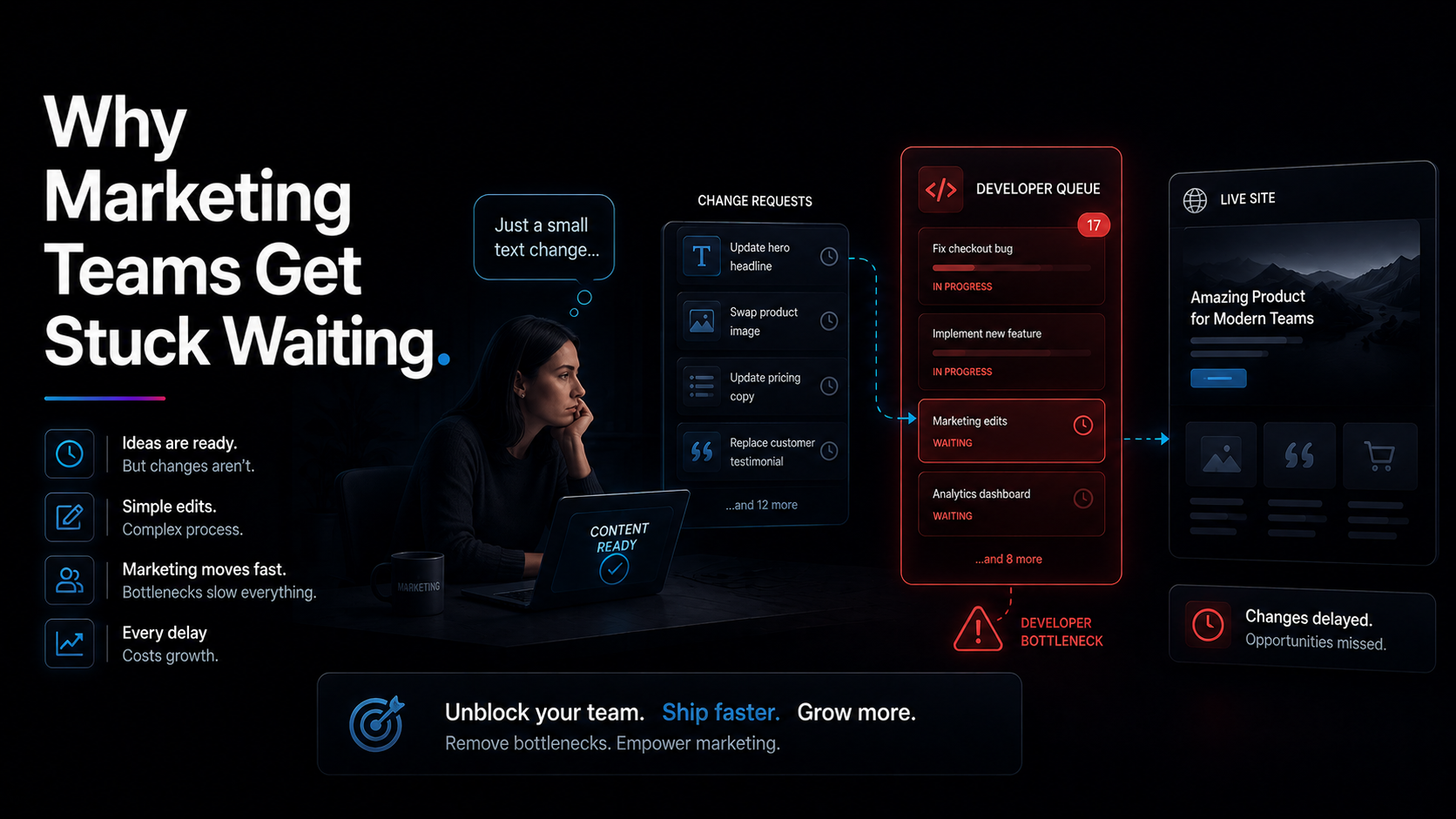
That is not just a workflow annoyance.
It becomes a growth problem.
When content changes move slowly, campaigns move slowly too.
Why this happens
The issue is usually not that the team communicates badly.
The issue is that the website stack was never built for editorial independence.
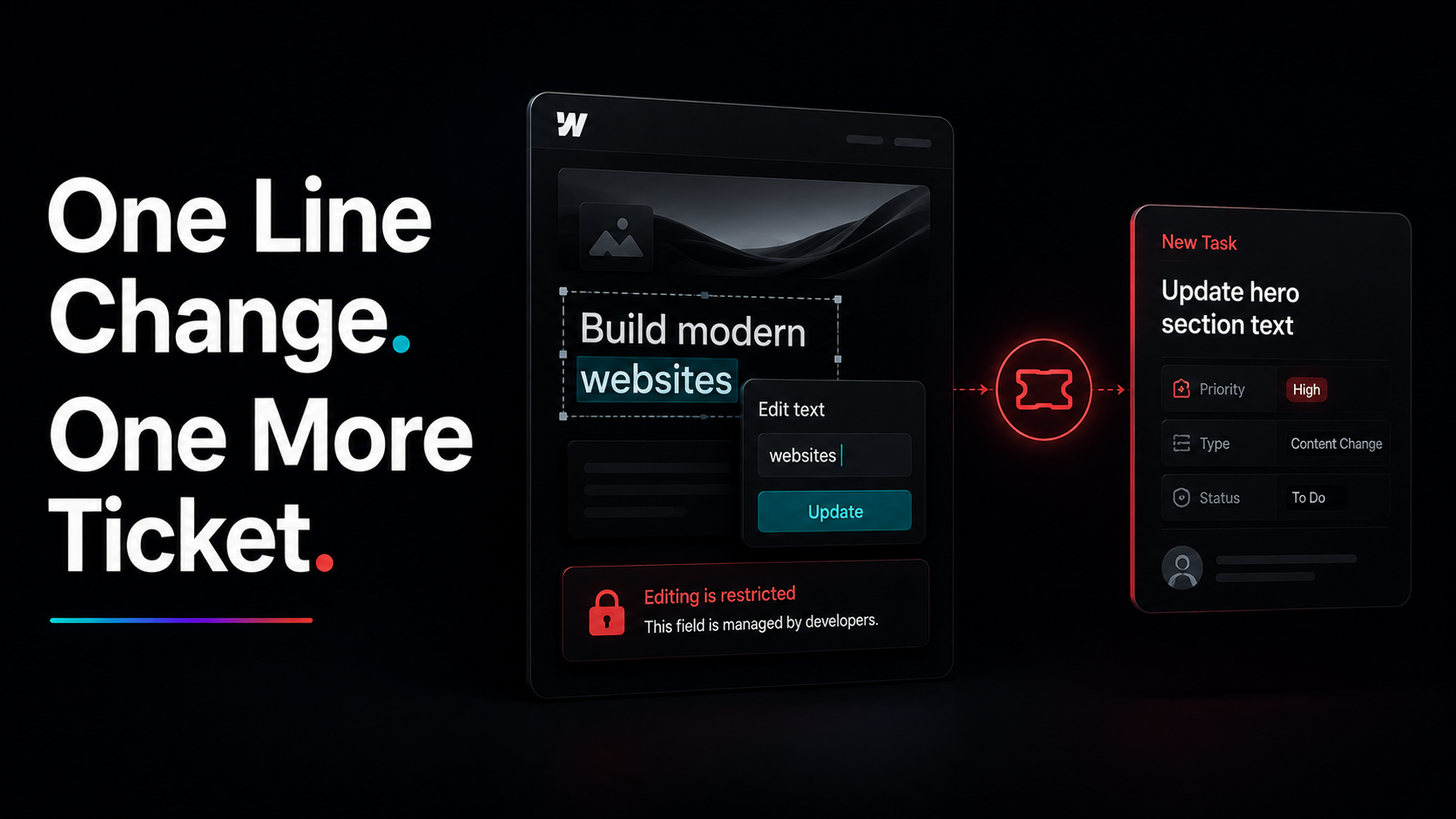
In one documented migration away from Webflow, the team described a real bottleneck where only one person could use Designer mode at a time, turning even urgent website fixes into a queue. In other setups, the bottleneck comes from tightly coupled templates, developer-owned page structures, or missing CMS fields for the edits marketers actually need.
That means even small changes can require:
- code edits,
- template changes,
- republishing,
- developer review,
- extra QA for minor content work.
What this costs the business
The cost is not only slower publishing.
The bigger cost is lost responsiveness.
Marketing teams need to adjust pages when campaigns change, offers shift, product messaging evolves, or SEO opportunities appear. If they depend on developers for routine edits, the business loses speed exactly where speed matters most.
That delay often shows up as:
- slower campaign launches,
- outdated copy staying live too long,
- abandoned tests,
- more Slack messages and ticket overhead,
- frustration between marketing and development teams.
What a better CMS setup looks like
A better system does not remove developers.
It removes unnecessary dependency.
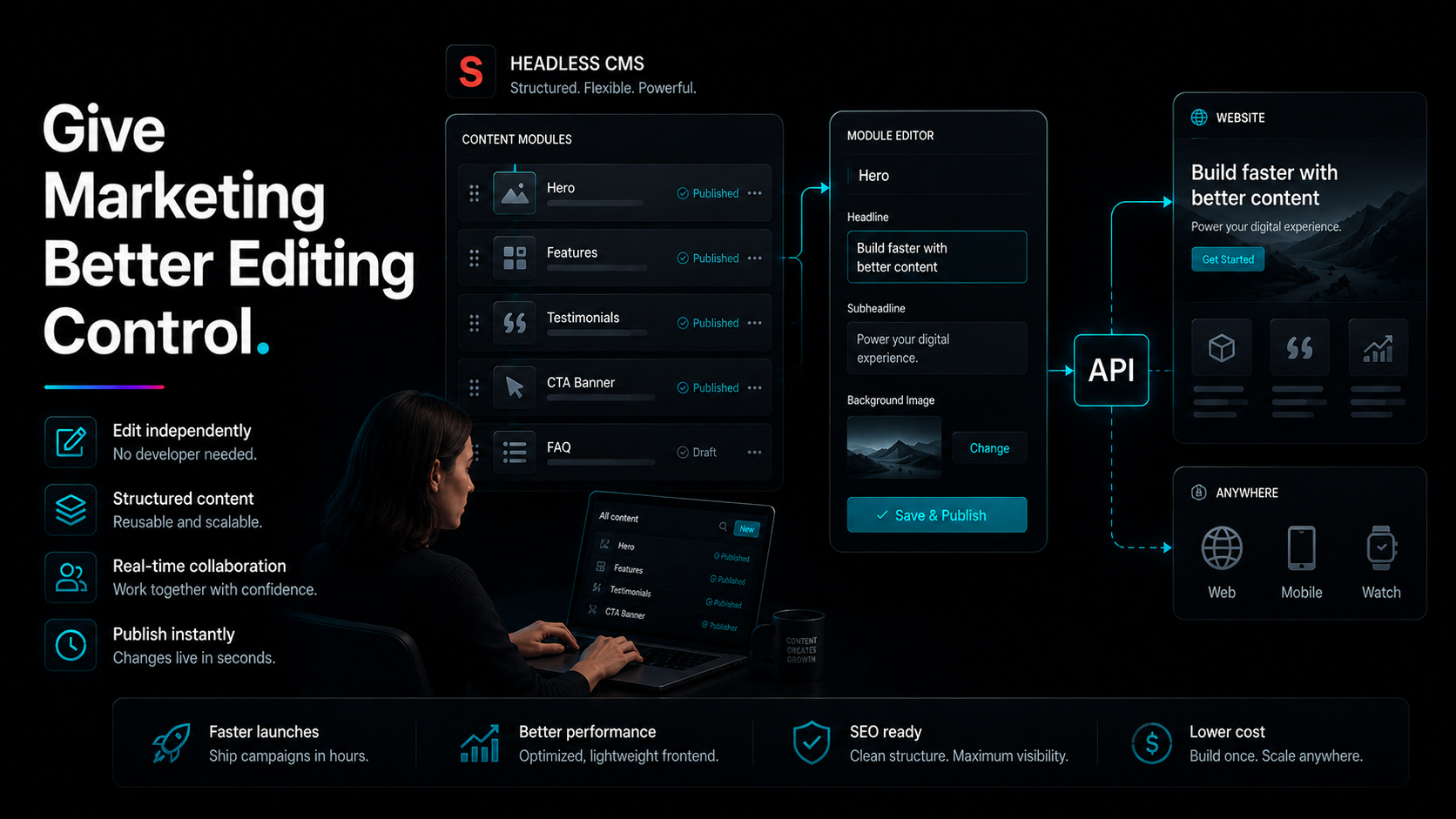
That usually means a headless CMS with content models designed around real editorial needs, not only around what the frontend happened to need on day one. Platforms like Sanity are commonly chosen because they support structured content, collaboration, and custom workflows that help content teams work more independently once the system is set up properly.
For example, instead of asking a developer to edit hardcoded sections, the marketing team can work with:
- editable hero sections,
- reusable CTA blocks,
- modular testimonial sections,
- structured FAQ entries,
- SEO fields,
- page-builder style modules designed for their workflow.
Why Sanity is often part of the solution
Sanity works well in this kind of setup because it allows developers to model structured content and create a custom editorial experience instead of forcing the team into a generic admin interface. That makes it easier to build a site where the marketing team can update content safely without touching code, while developers still keep control over the system architecture.
That is the key difference.
The goal is not to give full design control to everyone.
The goal is to give the right editing power to the right people.
Quick next step
If routine content updates still depend on engineering, the CMS is probably creating more friction than it should.
A short audit usually makes it clear whether the current setup needs better content modeling, reusable sections, or a more flexible editing workflow.
When this problem means it is time to migrate
A developer bottleneck becomes a real CMS problem when it keeps happening on normal business tasks.
If marketers still need dev help for routine page updates, campaign copy, landing page sections, or SEO fields, the stack is probably too rigid for the way the business now operates.
This is especially common when:
- the site was built quickly and never matured into a content system,
- marketing now runs more campaigns than before,
- the business depends on fast landing page iteration,
- one developer owns too much of the content workflow,
- the CMS was chosen for launch speed, not long-term operations.
Need to fix the bottleneck?
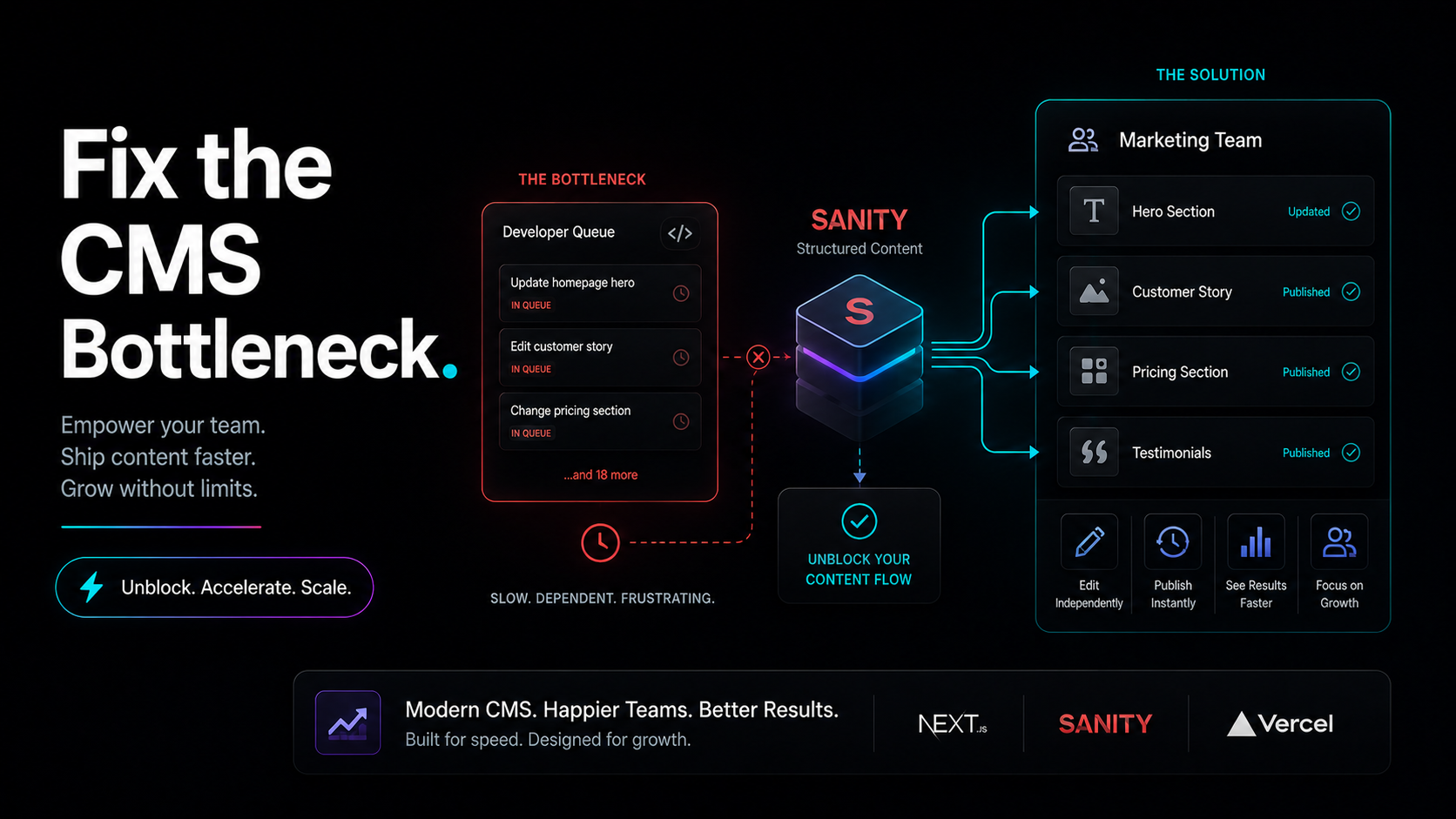
This kind of problem rarely gets solved with one more ticket.
It usually gets solved by rebuilding the content workflow so the marketing team can move faster without risking the site.
Talk about your website workflow
Frequently Asked Questions
Should developers stop managing website structure completely?
No.
Developers should define the system, but content teams should be able to handle routine edits without going through engineering every time.
Is this only a WordPress problem?
No.
It can happen in Webflow, custom-coded sites, WordPress, and other setups when editing workflows are too tightly tied to development.
Does a headless CMS automatically fix this?
Not automatically.
The CMS model has to be designed around the content team’s real tasks, otherwise the bottleneck simply moves into a different tool.
Conclusion
When marketers need developers for simple content changes, the website is no longer supporting the team well.
It is slowing them down.
A better CMS setup gives developers control over structure and gives marketers control over content, which is usually the balance growing teams actually need.